
A high sandal budget should buy better fit, materials, and repeat wear—not just a recognizable logo. The strongest options sit far below $1,000, so compare construction and use before paying luxury prices.
Compare sandals by fit, use, and cost
Start with the job the sandal must do
The right sandal solves a specific problem. A city pair needs stable straps, a flexible sole, and enough polish for dresses or trousers. A beach pair needs quick-drying materials and a footbed that can handle water. A travel pair must balance low weight, support, and easy adjustment. Treat the $1,000 limit as a ceiling, not a target. A sandal priced at $180 can outperform a $700 pair if it matches your walking routine and lasts through several seasons.
Use a simple value screen
| Use case | Useful features | Reasonable price range | Verdict |
|---|---|---|---|
| Daily city wear | Leather upper, padded straps, firm footbed | $120–$300 | Best balance of polish and wear |
| Long walking days | Adjustable straps, traction, molded support | $75–$180 | Choose function over decoration |
| Beach and pool | Water-friendly foam or synthetic rubber | $30–$100 | Do not pay leather prices |
| Occasion dressing | Refined lines, secure heel, quality finish | $250–$800 | Buy only if the wardrobe use is clear |
My verdict is direct: for most shoppers, the strongest value comes from a well-fitted sandal below $300. Prices vary by size, color, material, retailer, and seasonal discount, so compare the final delivered cost before treating a listed price as fixed.
Best value: keep most budgets below $250
My strongest value position is to stay below $250 unless the sandal fills a clear formal or collection-focused role. This range includes credible materials, repairable construction in some models, and enough variety for daily fashion. It also limits the risk of paying for a designer name that does not improve comfort or wear.
Birkenstock Arizona Big Buckle for polished everyday outfits
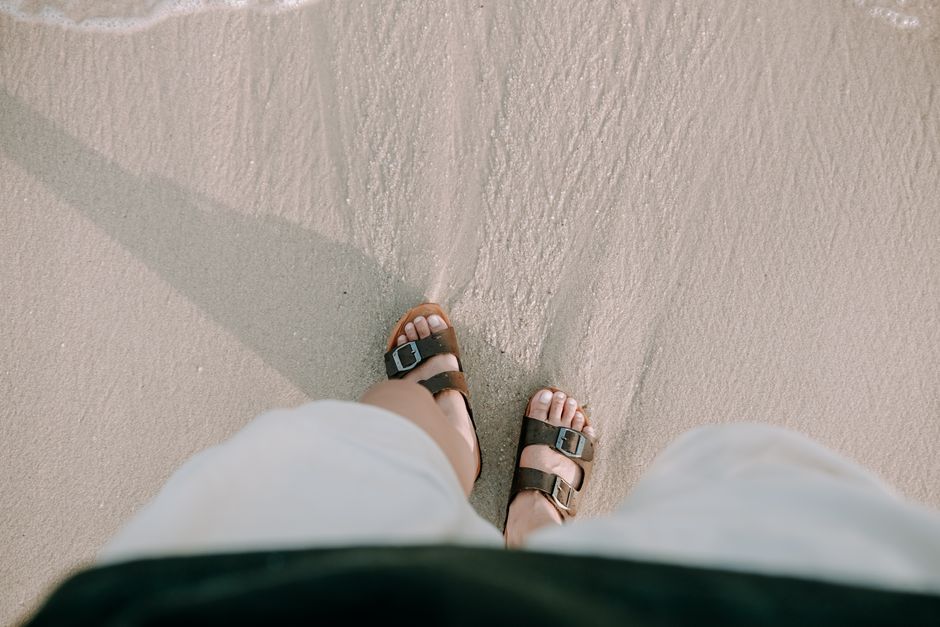
The Birkenstock Arizona Big Buckle in natural leather is listed around $174.95 in the United States. Its two wide adjustable straps and contoured footbed give it a secure, recognizable shape. It works best with cropped trousers, relaxed denim, linen skirts, and simple tailoring. Choose this as the clear winner for someone who wants one casual sandal with a stronger fashion presence. Skip it for black-tie dressing or if a rigid footbed causes pressure under the arch.
Chaco Z/Cloud for walking-heavy wardrobes
The Chaco Z/Cloud Adjustable Strap Cushioned Sandal is listed at $105. It combines an adjustable strap system, a polyurethane cushioning layer, and a ChacoGrip rubber outsole. It looks more outdoorsy than the Birkenstock, but that is an advantage for travel, festivals, and long days on uneven pavement. This is the best pick for comfort-first shoppers who still want color and a defined silhouette. The tradeoff is visual: it will not blend into a minimalist evening outfit.
Teva Hurricane XLT2 for practical summer travel
The Teva Hurricane XLT2 uses 22-millimeter straps, an EVA foam midsole, a nylon shank, and quick-dry recycled polyester webbing. A women’s size 7 half pair weighs about 7.75 ounces. Choose it for hot-weather trips, day hikes, and casual outfits that can handle a sportier finish. It wins on adjustability and traction, not luxury texture.
Choose stability before softness
The best sandal for long wear should hold the heel and midfoot in place before it adds extra cushioning. Soft foam feels pleasant during the first five minutes, but a loose upper makes the toes grip the footbed and can create rubbing after several hours. Measure both feet, fit the larger foot, and leave a small margin in front of the longest toe. A sandal that bends sharply through the middle is a poor choice for heavy walking, while a totally rigid sole can feel harsh on stairs and sloped pavement.
Look for pressure spread
Wide straps spread contact across the foot and usually feel more stable than thin decorative bands. The strap should touch the foot without cutting into it when you walk.
Check the heel and toe path
Your heel should stay centered, and your toes should remain relaxed rather than reaching for the edge. My verdict: a secure, moderately firm sandal beats an ultra-soft sandal for repeated daily use.
Use this five-point fit check before buying
Do this assessment indoors on a hard floor, wearing the socks or bare feet you plan to use with the sandal. Walk for at least ten minutes. The first impression is not enough; small fit errors become obvious when the foot warms and swells.
- Check the length. Keep roughly 6 to 10 millimeters between the longest toe and the front edge. Your heel should also remain inside the rear edge during a normal stride.
- Test the straps. Fasten every strap at a neutral setting. The sandal should stay on without a death grip from your toes. Tighten only enough to stop sliding.
- Walk upstairs. Watch for heel lift, toe overhang, or the foot rolling over the side. Any of these signals a mismatch in shape or width.
- Inspect pressure points. Run a finger under each strap. Hard seams, rough edges, and buckles that touch bone rarely improve with wear.
- Test the sole. Bend the sandal at the forefoot, then twist it lightly. It should flex where your foot bends while resisting excessive twisting through the arch.
My verdict is simple: reject a sandal that fails one serious fit check, even if the color and discount are excellent. Returns become harder after outdoor wear, and a low price cannot fix the wrong shape.
When a $900 sandal is a bad purchase
A $900 sandal is a poor buy when the extra cost comes mainly from branding, fragile decoration, or a shape you can wear only twice a year. Luxury pricing can reflect better leather, hand finishing, limited production, or a distinctive design, but the price tag does not guarantee arch support, traction, or a comfortable break-in period. A buyer who needs a daily summer shoe should first ask if the upper can handle sweat, dust, and repeated cleaning. Delicate suede, pale untreated leather, and thin metallic finishes may look beautiful in a boutique and age badly in real rotation.
Watch the cost-per-wear calculation
Divide the purchase price by realistic wears during the first two years. A $900 sandal worn ten times costs $90 per wear. A $225 sandal worn sixty times costs $3.75 per wear. The cheaper pair creates more value even if it has less prestige. Count alterations, protective soles, shipping, tax, and repairs too. Those costs can add another $50 to $150 to a premium purchase.
Know when to buy a different type
Do not buy a delicate leather sandal for beach trips, long trail walks, or heavy rain. Choose a water-friendly sport sandal instead. Do not buy an unstructured slip-on if your foot needs firm heel control. Choose an adjustable style with a shaped footbed. Avoid buying a dramatic platform when you commute on uneven sidewalks; a lower stable sole will serve you better. My verdict: spend close to $900 only for a design you will wear often, a material you can maintain, and a fit that feels secure before breaking in.
Questions that separate a good buy from a logo
Does a higher price mean better comfort?
No. Comfort comes from fit, strap placement, sole geometry, and pressure distribution. A costly sandal can still rub, slide, or force the toes to grip. Judge comfort after a measured walking test, not after standing on a carpeted shop floor.
Is leather always the right material?
No. Leather suits polished city dressing and can develop a useful patina, but it needs protection from prolonged water and may feel hot. Recycled polyester, rubber, and synthetic foam make more sense for beaches, humid travel, and easy cleaning. Match the material to the climate and the care you will actually provide.
Should a fashion sandal have arch support?
It does not need a medical-style arch, but it should keep your foot from sliding and collapsing into the inner edge. For long walking, choose a stable footbed and a secure heel. My verdict: material and support should serve the wardrobe, not compete with it.
Final picks by wardrobe and walking needs
The best sandal is the one that earns repeated wear across the situations you actually face. Use the table as a decision tool, then confirm size, return terms, and the current price for your chosen color.
| Best for | Pick | Key specification | Approximate listed price | Verdict |
|---|---|---|---|---|
| Elevated casual outfits | Birkenstock Arizona Big Buckle | Two adjustable straps and contoured footbed | $174.95 | Best style-to-value choice |
| Long walks and travel | Chaco Z/Cloud | PU cushioning, adjustable straps, ChacoGrip outsole | $105 | Best comfort-first choice |
| Outdoor summer plans | Teva Hurricane XLT2 | 22mm straps, EVA midsole, nylon shank, 7.75oz half pair | Varies by color and sale | Best practical choice |
For one versatile fashion sandal, choose the Birkenstock Arizona Big Buckle. For walking, choose the Chaco Z/Cloud. For water-friendly travel and uneven ground, choose the Teva Hurricane XLT2. A designer sandal under $1,000 can be worthwhile, but only after it beats these lower-cost benchmarks on fit, wear frequency, and construction.
