
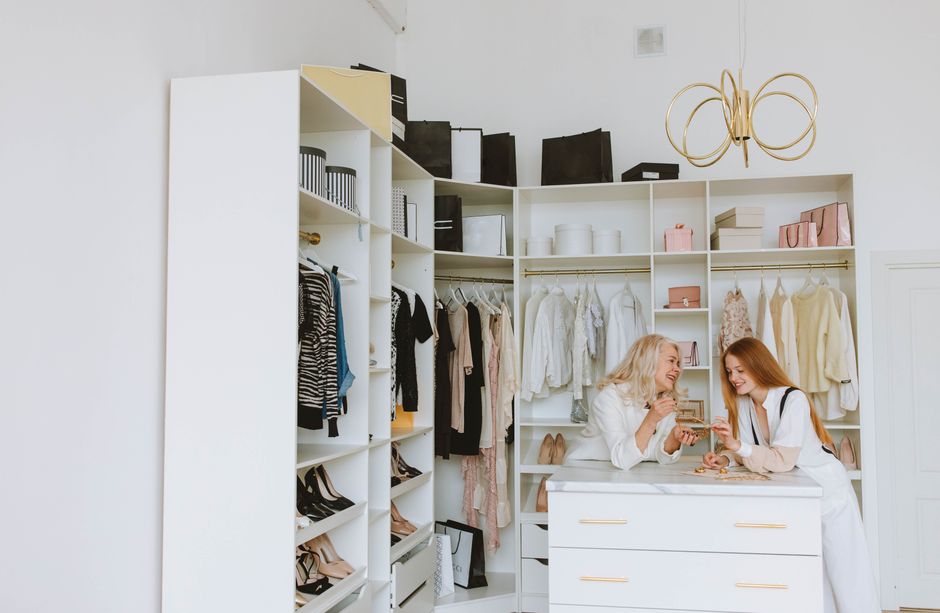
A stylish wardrobe does not require a large monthly haul. It requires a clear gap between what you already own and what your outfits actually need. With $100 per month, the strongest approach is to buy fewer pieces, repeat outfits with confidence, and save for items that improve several looks at once.
A $100 Budget Works Only When You Stop Shopping by Mood
My strongest recommendation is to treat the $100 as a wardrobe maintenance fund, not a shopping allowance. A shopping allowance creates pressure to spend every dollar. A maintenance fund lets you spend nothing during a month when your closet works well, then use $200 the next month for a better jacket, pair of trousers, or pair of shoes.
Start with outfit gaps, not empty hangers
Open your closet and list five outfits you would happily wear this week. Then list five outfits you wish you could wear but cannot complete. The second list shows the real gaps. You may not need another top. You may need a neutral layer, a skirt that fits properly, or a shoe that works with both denim and tailored trousers.
Write each gap as a complete outfit problem. “I need a black sweater” is vague. “I need a black layer that works with my blue jeans, gray trousers, and floral dress” gives you a useful test. A new item earns space only when it completes at least three outfits you can name before buying it.
Use a three-month spending window
Divide the year into four three-month windows. In each window, choose one main wardrobe goal: better work outfits, warmer layers, summer clothes, or occasion dressing. Keep at least $20 of the monthly budget unspent until you know which item will solve the most problems.
This rule also protects you from false bargains. A $15 top that never leaves the closet is more expensive than a $75 garment worn twice a week for two years. The useful question is not “Can I afford this today?” It is “How many outfits will this improve before I buy anything else?”
The Best Monthly Buying Order Is One Anchor, One Support Piece
Buy one anchor item before buying accessories or trend pieces. An anchor changes the shape of an outfit: a well-cut trouser, a washable cardigan, a versatile jacket, or a reliable everyday shoe. A support piece helps the anchor work with what you already own. This order gives a small budget visible results faster than buying five unrelated items.
Follow this four-step order
- Audit: photograph your most-worn outfits and mark the repeated problem, such as missing layers, weak footwear, or poor color balance.
- Choose the anchor: set a maximum price and select a color, fabric, and fit that can work with at least three existing outfits.
- Add support: use the next month’s money for a belt, basic top, tights, shirt, or other small piece that gives the anchor more combinations.
- Pause: wear the new combination at least four times before deciding what comes next.
This sequence is better than chasing a monthly aesthetic reset. A wardrobe becomes stylish when its parts repeat well. If the anchor does not create three outfits, return it, resell it, or stop buying matching pieces. The clear verdict: spend slowly on structure, then use low-cost details to change the mood.
Which Affordable Pieces Have the Best Cost per Wear?
Low prices help only when the garment survives regular use. For a $100 monthly plan, choose items with simple shapes, broad color options, and easy care. The best buys are not always the cheapest items on the rack.
Is a basic T-shirt worth the monthly budget?
Yes, when the fit solves a real outfit gap. The Uniqlo Supima Cotton T-Shirt usually sits around $19.90 to $24.90 in the U.S. and offers a useful 100% cotton base in several neutral colors. It is the best new basic for someone who needs a clean layer under blazers, cardigans, or denim jackets. Buy one in a color you do not already own, not a fourth white tee.
For a lower-cost option, the Hanes Beefy-T often sells near $10 to $15. It works better for relaxed outfits than polished office dressing because the fabric and cut have a more casual feel. Choose it when you want a weekend layer. Skip it when you need a smooth, fitted base under tailored clothing.
Should jeans take most of one month’s budget?
Usually, yes. Jeans are worn often enough to justify a larger purchase, but only if the fit is right. Levi’s 501 Original jeans commonly list near $79.50 to $110, with sale prices sometimes dropping below $60. The straight shape works with fitted tops, oversized shirts, loafers, and sneakers, so the 501 is my pick for a first versatile denim purchase. It has little stretch, so check the waist, rise, and sitting comfort before keeping it.
When does a low-cost sweater become a bad deal?
A sweater becomes a bad deal when it pills after a few wears, needs special care you will avoid, or has a shape that works with only one outfit. The Quince Mongolian Cashmere crewneck often appears around $50, making it a strong choice when you need a lightweight polished layer and can wash it carefully. It is not the best choice for rough daily use, frequent machine washing, or households with pets that catch on delicate knits.
The verdict is simple: buy jeans or a reliable layer before novelty tops. A $25 item worn twenty times costs $1.25 per wear. A $12 item worn once costs $12 per wear.
How to Spend the $100 Without Losing the Plot

Use the following allocation as a starting point for one month. It favors one useful garment, enough money for alterations or secondhand finds, and a small reserve. Prices vary by size, sale timing, and location, so the structure matters more than copying every number.
| Budget line | Suggested amount | What it covers |
|---|---|---|
| Anchor item | $45 | Jeans, trousers, cardigan, skirt, or simple jacket |
| Support piece | $25 | T-shirt, shirt, tights, belt, or layering top |
| Secondhand reserve | $20 | Thrifted blazer, wool layer, bag, or occasion item |
| Alterations and care | $10 | Hemming, buttons, stain treatment, or garment repair |
Shop the reserve before shopping full price
Use the $20 reserve for secondhand stores, consignment racks, clothing swaps, and local resale listings. Search by fabric and measurement instead of only by brand. A wool blazer with a $20 price tag may need $15 in sleeve alterations, but it can still outperform a cheap new jacket that loses its shape after one season.
Set a price ceiling for each category
Choose the ceiling before you browse: $25 for a basic top, $60 for jeans on sale, $75 for a blazer, and $100 for shoes that you expect to wear several times each week. If an item exceeds its ceiling, wait thirty days. The pause helps separate a true wardrobe need from a temporary craving.
My pick for the strongest monthly pattern is $45 on an anchor, $25 on support, $20 held for secondhand opportunities, and $10 for keeping existing clothes wearable. That plan creates more style than spending the entire amount on three fast-fashion pieces.
What Usually Breaks a Budget Wardrobe?
The biggest mistake is buying for an imaginary lifestyle. A sequined top does not solve a weekday outfit problem if you rarely attend events. A dry-clean-only coat may look like a bargain until each cleaning costs more than the original purchase. A wardrobe budget works when it reflects your calendar, climate, commute, laundry habits, and comfort preferences.
What should you stop buying?
- Do not buy an item because the discount looks impressive. Compare the sale price with the number of outfits it completes.
- Do not buy a duplicate until the existing version needs repair, no longer fits, or blocks a specific outfit.
- Do not buy a difficult fabric if you will avoid the care routine. Easy washing often creates more real value than a premium fiber.
- Do not buy shoes that hurt during a ten-minute walk. Uncomfortable shoes rarely become high-use items.
- Do not buy a trend piece before checking if you can style it with at least three garments you own.
When should you spend nothing?
Spend nothing when your closet already covers the next month’s events and seasons. Move the money into a separate clothing fund. The next purchase can then solve a larger problem, such as replacing worn shoes or tailoring a jacket. A pause is part of the method, not evidence that the plan failed.
| Situation | Best move | Reason |
|---|---|---|
| Several outfits lack one layer | Buy a cardigan, blazer, or jacket | One anchor can complete many looks |
| Basics are worn out | Replace the highest-use item | Frequent wear gives the best cost per wear |
| Closet feels full but outfits feel weak | Pause and edit | More clothing will hide the real problem |
| A special event is approaching | Borrow or shop secondhand first | Occasional items rarely justify full price |
A $100 monthly budget can build a stylish wardrobe, but the winning strategy is selective: one useful anchor, one support piece, careful secondhand shopping, and enough patience to let each purchase prove its value.
