
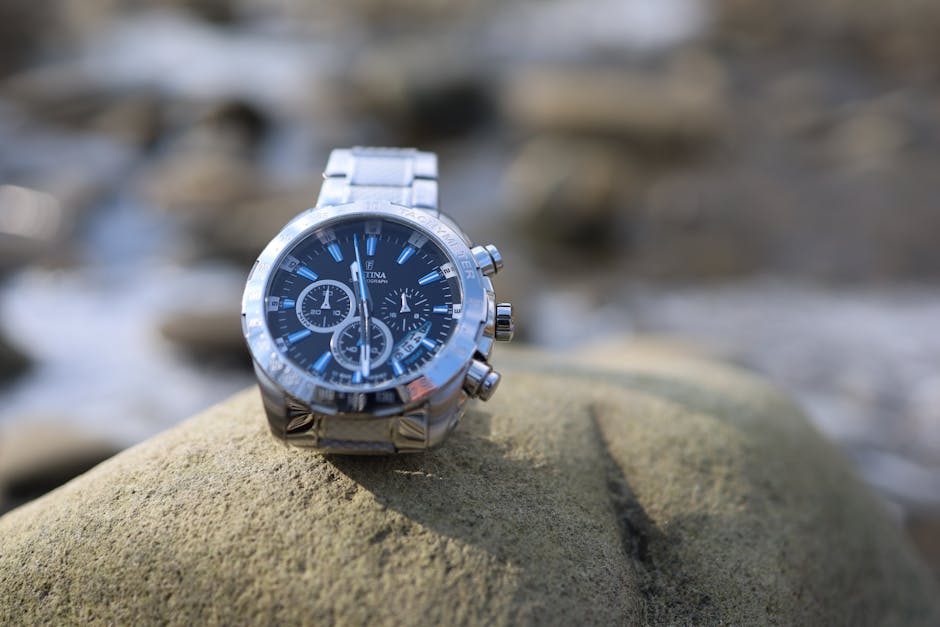
The average mechanical watch movement contains between 130 and 300 individual components — all working together without a battery, a circuit board, or a software update. A well-maintained mechanical watch from the 1970s keeps time today on the same mechanism it left the factory with. No phone in your pocket can say that.
That longevity is part of why a watch remains the one accessory most professional men treat as a deliberate decision rather than an impulse buy. But the market is enormous, the marketing is aggressive, and the gap between a genuinely right watch and an expensive mistake is harder to spot than it should be. What follows is the honest landscape: real brands, specific models, exact prices, clear reasoning.
What “Professional” Actually Means for a Watch
The word professional, when applied to a watch, doesn’t mean expensive. It means appropriate. A professional watch doesn’t compete for attention. It sits cleanly under a shirt cuff, reads the time at a glance, and disappears into the background of a meeting — until someone with actual knowledge notices it’s well-made.
Three criteria determine whether a watch belongs in a professional setting.
The Dial Complexity Rule
Fewer complications equal a more formal watch. A simple three-hand dial — hours, minutes, seconds — is the most professional configuration possible. Add a date window and you’re still appropriate in nearly every setting. Add a chronograph — the stopwatch subdials and pushers on the side of the case — and you’re signaling hobby, not function.
The one complication that earns a pass in formal environments: a GMT hand, tracking a second time zone. In global finance, international law, or senior consulting, it’s genuinely functional. In most other offices, it reads as technical enthusiasm rather than professional restraint. Keep the dial clean unless your job actually spans multiple time zones.
Case Size — The Numbers Worth Knowing
Men’s professional watches cluster between 36mm and 42mm in diameter for a reason. Below 36mm reads as vintage or fashion-forward, depending on context. Above 43mm is unambiguously a sport or dive watch — regardless of how the marketing frames it.
The measurement most buyers ignore: lug-to-lug distance. This tells you how far the watch extends across your wrist from top to bottom. A 42mm case with 50mm lug-to-lug overhangs most wrists visibly. A 40mm case with 46mm lug-to-lug sits proportionally. Always check both numbers when buying online, not just diameter.
Movement Types — What the Terms Actually Mean
Three movement types dominate. Quartz is battery-powered and accurate to roughly ±15 seconds per month. Automatic is self-winding mechanical, accurate to ±10–30 seconds per day, powered by wrist movement. Hand-wound is manual mechanical with the same accuracy range.
Quartz is more accurate. Mechanical is more interesting. For professional watches in the $300–$10,000 range, automatic dominates — and not irrationally. An object that runs on coiled springs, requires no power source, and lasts decades is a different thing to own than a battery-powered device, even if the device shows the same time.
Price and mechanical quality correlate within movement types, with diminishing returns above $2,000. The difference between a $400 Swiss automatic and a $7,000 Swiss automatic is real — better component finishing, longer service intervals, tighter accuracy specs — but it isn’t a 17x improvement in function. It’s an improvement in craft, durability, and recognition. Be honest about which you’re paying for.
Professional Watches at Every Budget — The Full Comparison
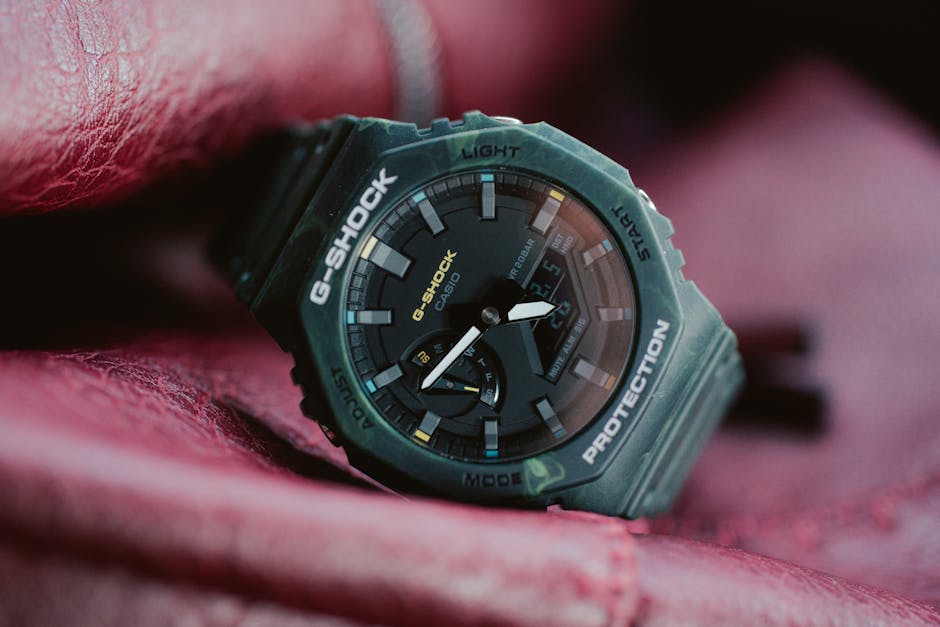
The honest landscape, from a first serious watch to a legacy purchase. Table content reflects 2026 market pricing for new retail unless noted.
| Budget | Watch | Case Size | Movement | Best Fit |
|---|---|---|---|---|
| Under $500 | Tissot PRX ($375) | 40mm | Powermatic 80 (ETA-based, Swiss) | First professional watch, tech and startup environments |
| $500–$1,000 | Seiko Presage SPB143 ($550) | 40.5mm | 6R35 (in-house Seiko) | Dress-casual offices, active daily wear |
| $1,000–$2,000 | Longines Master Collection ($1,500) | 40mm | L888 (COSC-certified) | Client-facing roles, understated luxury signal |
| $2,000–$4,000 | Tudor Black Bay 36 ($3,200) | 36mm | MT5400 (in-house Tudor) | Conservative dress environments, smaller wrists |
| $4,000–$6,000 | Omega Seamaster Aqua Terra 41mm ($5,200) | 41mm | Co-Axial Master Chronometer (METAS-certified) | Senior professionals, any formal environment |
| $6,000+ | Rolex Datejust 41 (~$7,100 new / ~$5,500 pre-owned) | 41mm | Caliber 3235 (in-house Rolex) | Executive-level, investment piece, recognized universally |
One watch the table leaves out: the Grand Seiko SBGW231 (~$4,500). It’s a hand-wound piece with dial finishing that rivals watches at twice its price — the result of Seiko’s Shizukuishi Studio craftspeople polishing individual movement components by hand. In environments where watches are actually discussed, it signals knowledge rather than just spending power.
At the entry end, the Tissot PRX earns its spot through design coherence. The integrated bracelet — links flowing directly into the case without visible transitions — was a design move that luxury brands charged $5,000+ for in the 1970s. At $375, it’s the clearest example of a watch punching above its price class.
Industry by Industry — Which Watch Actually Works Where
What Works in Finance and Law?
These environments are the most conservative of any professional setting. The unwritten rule: your watch should read as expensive without announcing itself. That’s a narrow target.
The Rolex Datejust 41 in steel with a jubilee bracelet is effectively the industry standard — present enough to signal success, restrained enough not to seem like a performance. The Cartier Tank Must ($2,800) works as an alternative if you prefer the rectangular dress watch tradition and a slightly European flavor. Both communicate seriousness without trying to.
What doesn’t work: brightly colored dials, rubber straps, oversized cases. A 47mm Panerai Luminor is a beautiful watch. In a client-facing finance meeting, it reads as off-duty. The watch is fine. The context is wrong.
Do Different Rules Apply in Creative and Tech?
In creative agencies, product companies, and tech environments, watch culture shifts toward interesting over expensive. A Seiko SPB155 “Sumo” ($550) with its vivid blue dial generates more genuine conversation in a product review than a Datejust would. Apple Watch Ultra ($799) is fully legitimate here in ways it isn’t in law or banking — if your actual workflow lives on your wrist, it’s a professional tool, not a compromise.
The argument against a smartwatch in conservative fields isn’t quality. It’s optics: it signals “always available and responding” rather than “fully present in this meeting.” Same device, different rooms, different meaning.
What About Healthcare and Scientific Settings?
Clinical and lab environments impose real constraints. The watch needs to survive repeated hand washing, stay legible at arm’s length, and avoid catching on equipment. Metal bracelets are harder to sterilize than rubber or silicone — a meaningful concern in surgical settings. The Rolex Submariner is common among senior physicians not as a status choice but a functional one: it’s designed to get wet, handles repeated sanitizing, and requires no special care. A Tissot PRX on a rubber strap accomplishes most of the same things at a fraction of the cost.
The Dial Size Problem Nobody Mentions
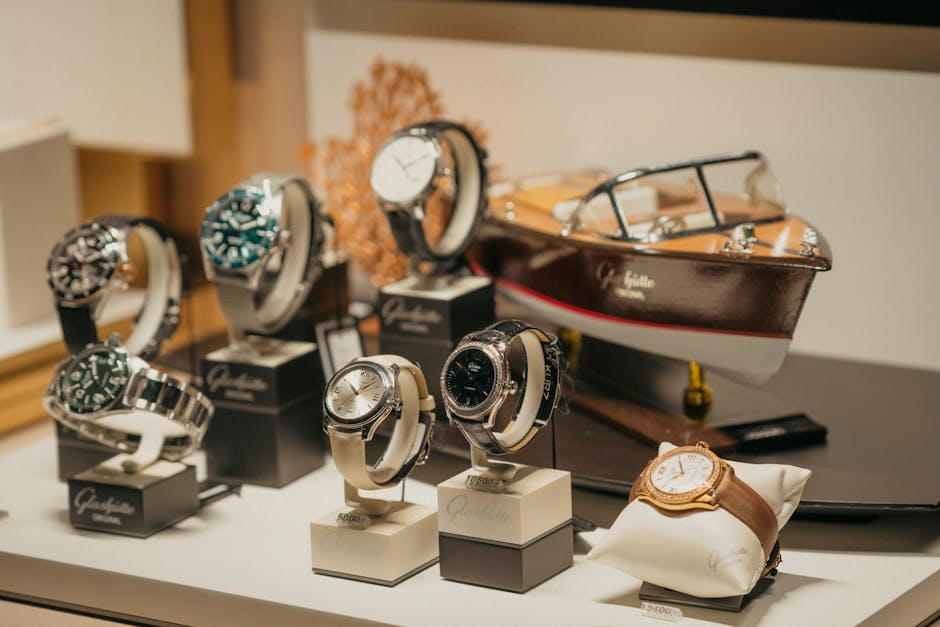
Buy a watch that fits your actual wrist, not the one that looks best in product photography. A 44mm case on a 6.5-inch wrist looks like a costume piece. For most men with wrists under 7 inches in circumference, 38–40mm is the right ceiling. A well-proportioned 38mm watch looks more expensive than an oversized 44mm on the same wrist because the proportions resolve correctly. Always try it on before buying. Diameter is the measurement that misleads most, and it’s the only one most listings show.
Five Mistakes That Cost Men Real Money
- Buying for the logo, not the watch. Tudor and Rolex share manufacturing infrastructure, movement components, and ownership under Rolex SA. The Tudor Black Bay 36 costs $3,200. An entry Rolex Oyster Perpetual 36 costs $5,800. The premium is real and partly decorative at that price tier. Understand what you’re actually buying before you pay for it.
- Skipping the pre-owned market entirely. A Rolex Datejust 41 in excellent pre-owned condition from an authenticated grey market dealer costs $5,000–$5,800 versus $7,100 new. Dealers like Bob’s Watches and WatchBox publish transparent pricing and condition grading. The manufacturer warranty is gone. The watch — often with original box and papers — is identical. That’s a 25% discount for knowing where to look.
- Ignoring total cost of ownership. A mechanical watch needs servicing every 5–8 years. Rolex factory service runs $800–$1,200. Over a 30-year ownership horizon, that adds $3,000–$5,000 to the sticker price. A Tissot with a third-party service at $150–$200 changes the long-term math considerably. Know your number before you buy.
- Buying a dress watch for an active life. A slim watch on a leather strap looks superb on day one. After 18 months of genuine daily wear — client sites, travel, varying environments — the strap looks rough and the case shows. For real daily professional use, a steel bracelet watch handles wear without showing it. Leather is for special occasions or careful wearers.
- Choosing a strap that contradicts the watch. A $1,500 Longines on a cheap aftermarket rubber strap sends conflicting signals. A $375 Tissot PRX on its original integrated steel bracelet looks coherent and considered. With integrated-bracelet watches especially, the bracelet is part of the design system — swapping it defeats the aesthetic the way removing a car’s bodywork defeats the styling.
The Verdict: Specific Picks for Specific Situations
Early career, first professional watch under $500: buy the Tissot PRX. The integrated bracelet design — borrowed from 1970s luxury references — lands at $375 with a Swiss automatic movement. It reads as a deliberate choice, not a placeholder.
Mid-career, long-term watch under $2,000: the Longines Master Collection at $1,500. COSC-certified movement, restrained dial, Swiss heritage that carries real meaning beyond its price. It doesn’t announce itself. In formal professional environments, that restraint is the correct move.
First serious luxury watch in the $3,000–$5,000 range: Tudor Black Bay 36 over the Rolex Oyster Perpetual 36. Same manufacturer ecosystem, in-house movement, better proportions for most wrist sizes. The OP has more name recognition. The Black Bay 36 wears correctly on the majority of men who actually put it on their wrist.
Flagship investment piece that handles every environment: Omega Seamaster Aqua Terra 41mm at $5,200. The METAS Master Chronometer certification guarantees ±0/+5 seconds per day accuracy and resistance to magnetic fields up to 15,000 gauss — the most rigorous standard in consumer watchmaking. It survives formal dinners, international travel, and outdoor conditions without any special care. If dial finishing matters more to you than outdoor durability, substitute the Grand Seiko SBGW231 at $4,500.
Finance, law, or senior executive settings where the watch is genuinely read: Rolex Datejust 41. Not because it’s the best watch at its price — the Omega competes seriously — but because it’s universally recognized in rooms where such things are noticed. Recognition is part of what you’re purchasing at that tier. That isn’t shallow reasoning. It’s accurate reasoning.
| Situation | Best Pick | Price | Deciding Factor |
|---|---|---|---|
| Early career, first professional watch | Tissot PRX | $375 | Integrated bracelet design, Swiss automatic movement |
| Mid-career, under $2,000 | Longines Master Collection | $1,500 | COSC-certified movement, understated Swiss heritage |
| First luxury watch | Tudor Black Bay 36 | $3,200 | In-house movement, Rolex-adjacent quality, correct fit for most wrists |
| Flagship investment piece | Omega Seamaster Aqua Terra 41mm | $5,200 | METAS accuracy certification, all-environment durability |
| Executive or finance environments | Rolex Datejust 41 | $7,100 new / ~$5,500 pre-owned | Universal recognition in high-stakes professional rooms |
| Dial quality and craft over branding | Grand Seiko SBGW231 | $4,500 | Hand-finished dial quality that rivals watches at twice the price |
