

The fastest way to expose a bad blazer is to raise both arms for ten seconds. If the back pulls, the buttons gape or the shoulder seam moves past your shoulder bone, that cheap-looking bargain has already failed. I have seen shoppers save ₹1,000 at the counter and then spend another ₹800 fixing sleeves, waist shape and loose buttons. For most buyers, Gandhi Nagar is the best blazer market in Delhi for price and choice, but only if you inspect the garment properly.
Why Delhi blazer shopping goes wrong
The hanger hides the real fit
A blazer on a hanger can look sharp because the shoulders hold the shape. Your body tells the truth. Put it on over the shirt or T-shirt you plan to wear underneath. Close the middle button, stand naturally and check the shoulder seam. It should finish close to the point where your shoulder drops into your arm. If the seam sits on your upper arm, the jacket is too large. If it sits before the shoulder bone, it is too small.
Next, lift your arms, sit down and reach forward. A good blazer allows movement without turning into a tight shell. The sleeve should end near the wrist bone, leaving around 1 to 1.5 centimetres of shirt cuff visible for a formal look. Do not let a shopkeeper convince you that every fit problem can be altered. A tailor can shorten sleeves, but changing a narrow shoulder or badly placed armhole costs more and rarely looks clean.
Fabric and lining matter more than the label
Delhi’s hot months punish heavy synthetic fabric. For regular wear, look for cotton, linen blends or lightweight wool blends with a breathable weave. Polyester is not automatically bad, but a fully synthetic blazer with a shiny surface can look cheap under office lighting and feel sticky on a crowded Metro ride. Rub the fabric lightly between your fingers. It should recover its shape instead of staying crushed.
Check the inside lining, pocket corners and button attachment. Loose threads, bubbling near the lapel and puckering around the pockets are warning signs. Hold the blazer near a light source and inspect the stitching from inside. A neat lining, evenly spaced buttons and a clean lapel roll tell you more than a famous name. My verdict is simple: reject any blazer that fails the shoulder, movement or lining test, even if the price feels impossible to refuse.
Which Delhi market gives the best value?

There is no single winner for every budget, but there is a clear winner for most first-time buyers. Choose Gandhi Nagar for the lowest practical price and the widest ready-made selection. Choose Lajpat Nagar when you want easier browsing and a more polished retail mix.
| Market | Working budget | Best for | Main risk |
|---|---|---|---|
| Gandhi Nagar | ₹900–₹2,500 | Low-cost ready-made and bulk buying | Limited trial space and uneven finishing |
| Sarojini Nagar | ₹600–₹2,000 | Surplus pieces and trend-led styles | Defects, mixed sizing and no repeat stock |
| Lajpat Nagar | ₹1,500–₹4,500 | Women’s blazers, coordinated outfits and easier retail shopping | Higher opening quotes |
| Karol Bagh | ₹2,000–₹6,000 | Formalwear, suit separates and tailoring support | Less bargain-friendly than wholesale lanes |
My pick for a one-blazer trip
If I had one afternoon and a budget under ₹2,500, I would start at Gandhi Nagar and compare at least five pieces before paying. The market is strongest when you know your chest measurement and are willing to inspect several shops. The Gandhi Nagar market listings reflect its focus on ready-made clothing and wholesale trade, but retail buyers still need to ask about minimum quantities and alteration charges.
When the other markets make more sense
Sarojini Nagar is tempting when you want a fashion-forward blazer under ₹2,000, but it rewards patience rather than speed. Lajpat Nagar is the better choice for a first blazer, especially if you want to try multiple silhouettes without sorting through wholesale stock. Karol Bagh wins for a formal event when a tailor needs to adjust the jacket after purchase. The Sarojini Nagar shopping guide is useful for checking the latest access and timing details before travelling.
How to inspect a blazer in ten minutes
A market purchase becomes safer when you follow the same order every time. Do not begin with colour, brand or the shopkeeper’s opening price. Begin with structure. A blazer exists to give your upper body a clean shape while still letting you move, so the inspection should test both jobs.
Minute one to five: test the fit
- Wear the shirt or thin top you expect to pair with the blazer.
- Check the shoulder seam. It should end at the shoulder edge, not halfway down the arm.
- Fasten the middle button. The fabric should lie flat without a sharp X-shaped pull.
- Place two fingers between your chest and the closed jacket. Less space means the blazer is tight; much more space means it is loose.
- Raise both arms, sit down and reach forward. The jacket should move with you without dragging across the neck.
- Check sleeve length at the wrist. A tailor can shorten a sleeve, but cannot fix a poor armhole cheaply.
Minute six to ten: test the construction
Turn the blazer inside out. Look at the seam allowance, lining and pocket bags. The lining should not twist when you move your arms. Press the lapel with your thumb; it should roll smoothly rather than sit like a flat strip of shiny cloth. Open and close the pockets twice. If the pocket mouth stretches or the fabric wrinkles, the jacket may lose its shape quickly.
Check the care label before discussing the price. A blazer that needs dry cleaning after every wear costs more to maintain than one that can be gently pressed at home. For summer, avoid thick padding and heavy lining. For winter weddings, a wool blend gives better warmth and shape than thin polyester. Ask for the chest measurement, not just the size number, because a size 40 from one manufacturer may fit like a 38 from another.
Do not buy a blazer with missing buttons, a damaged lining or a strong chemical smell on the promise that it will improve later. Those are not styling details. They are repair costs.
What I would actually buy at each market
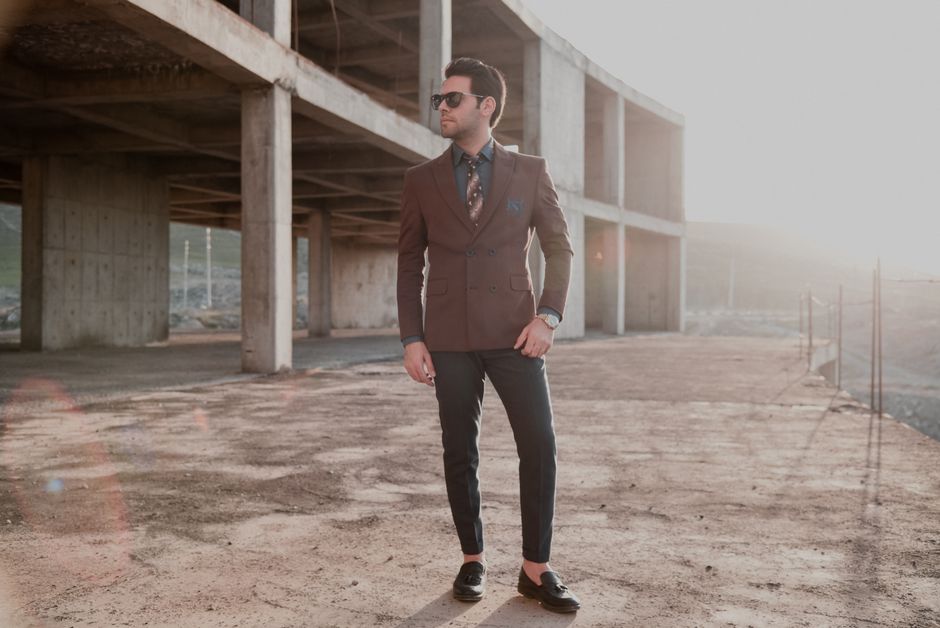
My opinion: use branded blazers as a price and construction benchmark, then buy locally only when the market piece passes the same test. A low street price is not a bargain if the jacket looks worse after two wears.
Three useful quality reference points
- Louis Philippe Men Navy Slim Fit Check Formal Blazer — a 60% polyester, 20% viscose and 20% wool blend listed around ₹4,350 in one current official listing. It is the benchmark I would use for a smarter formal blazer with some wool content. See the listed construction.
- Louis Philippe Men Black Slim Fit Solid Formal Blazer — a two-button formal style listed around ₹4,971, with a polyester construction. I would not pay a similar amount for a plain local polyester blazer unless its fit and finishing are clearly better. Check the reference price.
- Louis Philippe Sport Men Black Super Slim Fit Solid Casual Blazer — a cotton casual option listed around ₹4,350. It is a better comparison for a blazer worn with jeans, chinos or a plain T-shirt. Compare the fabric details.
When not to buy from the market
Do not buy locally if you need a guaranteed size, a matching trouser or a return option for an event next week. In that case, a department-store blazer may cost more but removes the risk of finding a perfect jacket with no usable trousers. I also avoid market blazers with extreme skinny cuts, loud contrast buttons or glossy fabric because they date quickly and are difficult to style twice in the same month.
Questions to settle before you pay
Is Gandhi Nagar better than Sarojini Nagar for blazers?
Yes, Gandhi Nagar is the stronger choice for a serious blazer search. It usually gives you more depth in formal and semi-formal stock, while Sarojini Nagar is better for occasional surplus finds. Go to Sarojini only when you can inspect every seam and accept that the same style may not be available in another size.
Can I buy a good blazer under ₹1,500 in Delhi?
Yes, but expect a basic polyester or blended fabric and treat the price as a starting point, not proof of quality. Gandhi Nagar and Sarojini Nagar are the most realistic places to search. At this budget, prioritise shoulder fit, clean stitching and a useful colour such as navy, charcoal or black over a decorative pattern.
Should I buy a blazer or a complete suit?
Buy a blazer when you want more outfit options with jeans, chinos or separate trousers. Buy a complete suit only for interviews, formal ceremonies or work that requires matching tailoring. If the trouser fabric, colour and rise do not match the jacket, do not accept the shopkeeper’s claim that the difference will disappear after pressing.
The best blazer market in Delhi is Gandhi Nagar for value, but the best blazer is the one that fits your shoulders, survives the movement test and still looks clean after you leave the shop.
