
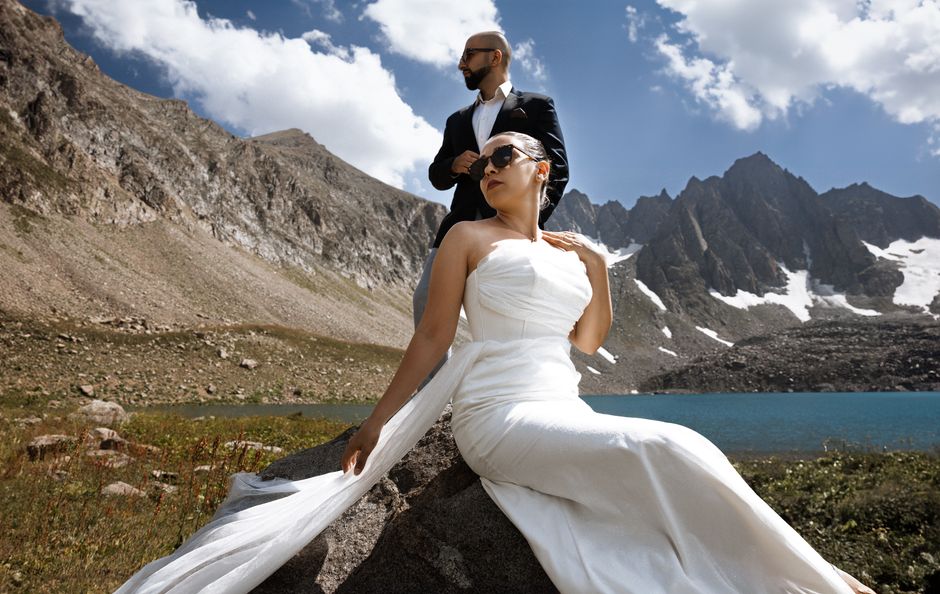
A spring ceremony can feel 15°F colder after sunset, especially on grass beside a lake or in an open garden. That temperature swing ruins more outfits than the dress code does. Choose for the ceremony location, wind, and sunset first. Then make the dress look beautiful.
Start with the ceremony, not the dress
Read the invitation for useful clues
The invitation tells you the formality, but the venue tells you what the clothes must survive. A garden ceremony calls for a different outfit from a vineyard wedding, even when both invitations say semi-formal. Check the ceremony start time, reception location, expected end time, and any note about grass, gravel, beach, or a tent.
Use the dress code as your ceiling. For cocktail attire, pick a polished midi or a refined knee-length dress. For formal attire, choose a longer hem, richer fabric, or stronger tailoring. For semi-formal attire, a printed midi works well, but avoid anything that looks like a daytime office dress.
Plan for the temperature drop
Look at the forecast for the actual venue rather than the nearest city. A 68°F afternoon can become a chilly 52°F evening once the sun disappears. Bring a layer that covers your shoulders without turning the outfit into a winter look. A cropped cardigan, silk wrap, or lightweight tailored jacket works better than a bulky coat.
Check the ground before choosing shoes. Thin stilettos sink into lawn. Pale suede shows every mark from gravel. Bare sandals become uncomfortable when the ground cools. Verdict: choose the venue before the color, neckline, or trend. That single decision prevents most outdoor wedding outfit mistakes.
Choose a silhouette that survives grass, wind, and photos

The best shapes for outdoor movement
A spring outdoor wedding guest dress should move when you walk but stay controlled when the wind picks up. A softly tailored midi, wrap dress, or A-line shape gives you room to sit, climb steps, and move across uneven ground. Bias-cut dresses can look elegant, but clingy fabric may reveal every gust and wrinkle after an hour in a chair.
| Silhouette | Best use | Main risk | Verdict |
|---|---|---|---|
| A-line midi | Garden or lawn ceremony | Can look plain without texture | Best all-round choice |
| Wrap dress | Changing temperatures | Loose ties can shift while walking | Best for adjustable comfort |
| Slip midi | Formal evening event | Wind and cling | Best with a secure layer |
| Maxi dress | Formal vineyard or tent wedding | Hem catches on grass | Best only with a clean walkway |
How long should the hem be?
For most outdoor ceremonies, the safest hem lands between the knee and mid-calf. It looks dressed up but will not drag through damp grass. If you choose a maxi, lift the hem while walking and check that it sits at least one inch above the ground when you wear the intended shoes.
Verdict: the A-line midi wins for most guests because it balances movement, coverage, and photographs. Pick a maxi only when the venue has firm paths and the invitation clearly supports formal dressing.
Spring fabrics: breathable beats delicate
What fabric works in afternoon sun?
Look for fabrics that breathe, resist obvious creasing, and hold their shape after sitting. Cotton poplin feels crisp and handles warmth well. Viscose drapes nicely but can crease at the waist. Crepe hides small wrinkles and looks polished in photographs. Silk feels luxurious, yet lightweight silk can snag, show perspiration, and need constant care.
Reformation’s Katerina Dress is a useful example of the sleek bias-cut look. It suits a formal evening ceremony, but its smooth, close fit needs a secure layer and careful movement on grass. The Anthropologie Somerset Dress takes the opposite approach with a smocked bodice and fuller skirt. It is easier to sit in and more forgiving after a long reception, but the volume can feel too casual for a strict black-tie invitation.
What fabric should you avoid?
Avoid thin jersey that clings when the air turns damp, stiff polyester that traps heat, and very fragile satin if the reception includes wooden benches or rough outdoor chairs. Lace can work, but large open patterns may catch on jewelry or bag hardware. Linen looks excellent in daylight, yet a heavily wrinkled linen dress can read as casual rather than relaxed.
For a budget-friendly option, a structured Lulus satin midi can deliver the shine of a formal dress, but inspect the lining and seams before buying. Satin photographs well; cheap satin also shows every crease. Verdict: choose crepe, cotton poplin, or a lined viscose blend when you want the best mix of comfort and polish.
Which dress code should control your choice?

Can you wear a floral dress to a formal wedding?
Yes, if the fabric and shape look formal enough. Choose a darker floral on crepe, silk, or lined satin with refined shoes and jewelry. Skip tiny scattered flowers on thin cotton when the invitation says formal. That combination usually looks like a daytime sundress.
Is black acceptable for a spring outdoor wedding?
Black is acceptable unless the couple or cultural setting says otherwise. Make it feel seasonal with a colored shoe, pearl jewelry, a pale wrap, or a botanical print bag. Do not force pastel colors if they wash you out or make the dress look bridal.
Can you wear a maxi dress to a semi-formal ceremony?
Only if the fabric is relaxed and the styling is simple. A cotton maxi with flat sandals can work for a beach event. A beaded floor-length gown is too formal for most semi-formal ceremonies. Verdict: match the dress’s total impression to the code, not just its hemline. Fabric, shine, structure, and accessories all change how formal a dress looks.
Build the outfit around one useful layer
The layer I would choose
Take a lightweight cropped cardigan or neat wrap. It is more useful than a statement jacket because it warms your shoulders, fits in a small bag, and does not fight with a printed dress. A cardigan also handles the transition from bright afternoon ceremony to cool outdoor dinner without making the outfit look like workwear.
The Uniqlo UV Protection Crew Neck Cardigan is a practical example for a casual or semi-formal event because its fine knit packs easily and its simple shape does not compete with jewelry. For a dressier wedding, the Sézane Gaspard Cardigan offers a more decorative button-front look, but its fitted shape works best over a dress with a clean neckline. A silk or satin wrap looks more formal, though it can slide off your shoulders during dinner.
How to stop the layer from looking random
Repeat one color from the dress in the cardigan, wrap, or shoes. A cream layer works with a blue floral dress, while a chocolate-brown layer gives rust, green, and pink prints more depth. Avoid matching the layer exactly to the dress unless the outfit is intentionally monochrome.
Pack the layer from the start. Do not rely on a venue heater or a friend’s spare jacket. Verdict: a lightweight cardigan is the best outdoor-wedding layer for most guests because it offers warmth, portability, and enough structure for photographs.
Fix the shoes and accessories before they ruin the dress
Use this five-point check
- Choose a block heel under 2.5 inches if the ceremony is on grass. The wider base stays stable and still looks polished.
- Use heel caps or a low block heel for soft ground. A narrow heel is a bad match for lawns, gravel, and wooden footbridges.
- Carry fashion tape for a wrap neckline, a small blister kit, and a compact folding flat if you expect to dance outside.
- Keep the bag small and hands-free. A compact shoulder bag or slim clutch will not pull at a delicate strap.
- Pick jewelry that will not catch on lace, fringe, or a cardigan. Small drop earrings usually look more intentional than a full stack of bracelets.
The Naturalizer Banks Pump is a sensible choice when you need a dressier closed toe and a stable heel. For a flatter outfit, the Sam Edelman Felicia ballet flat gives you a polished shape without sinking into the lawn. Neither shoe fixes a poor fit, so walk in them for at least 20 minutes before the event.
Avoid pale shoes if the venue is damp, and avoid new sandals if you have not tested the straps. Verdict: stable shoes beat impressive shoes at every outdoor ceremony. Guests remember the person who danced comfortably, not the person who limped across the grass in six-inch heels.
Buy, test, and veto the dress before the RSVP
Run the outdoor test at home
Put on the complete outfit, including underwear, shoes, layer, and bag. Sit on a firm chair for 20 minutes. Walk up stairs. Raise both arms. Bend to pick something up. Stand near an open window or outside for ten minutes. If the dress twists, exposes the neckline, traps heat, or needs constant pulling, return it.
Know the common deal-breakers
- Do not buy a dress that needs special undergarments you have not already tested.
- Do not choose a hem that drags when you wear the actual shoes.
- Do not trust a product photo that hides the back, lining, or side seam.
- Do not pick white, ivory, or very pale champagne unless the couple specifically approves it.
- Do not assume a loose dress is comfortable if the neckline falls open whenever you sit.
Check the return window before ordering and save the original tags until the full try-on is finished. If the ceremony is outside and the reception is indoors, the dress must work in both settings. That rules out beach-only cotton for a formal ballroom dinner and heavy evening velvet for a warm afternoon garden ceremony.
Final verdict: buy the dress that stays comfortable, covered, and polished after two hours of movement. For most spring outdoor weddings, that means a lined A-line midi in crepe or cotton poplin, a portable cardigan, and a block heel below 2.5 inches. Everything else is decoration.
