

You leave home in a polished outfit, walk three blocks, and feel as if your shirt has sealed itself to your skin. Humidity turns small styling mistakes into a full-day problem: tight waistbands trap heat, clingy fabrics show sweat, and heavy shoes stay damp long after the rain has stopped.
The best summer outfits for humid weather are built around air movement, fast-drying layers, and enough shape to look intentional. You do not need a closet full of special clothing. You need the right fabric weight, a little room through the body, and shoes that can handle wet pavement.
Why humid-weather outfits feel hotter than they look
Humidity changes how clothing should work
Heat alone is manageable because sweat can evaporate from your skin. Humid air slows that evaporation, so your body loses less heat through perspiration. Clothing that sits tightly against your skin makes the problem worse by holding moisture in place. A stylish outfit for this climate must create a small pocket of airflow between your body and the fabric.
That does not mean wearing oversized clothes from head to toe. Too much volume can look shapeless and may even trap warm air around the torso. The stronger formula is one relaxed piece with one controlled piece: wide-leg trousers with a fitted tank, or a loose shirt over a straight skirt.
Airflow matters more than the thinnest fabric
A very thin synthetic top can feel hotter than a medium-weight linen shirt if it clings to your back. Look for fabrics that release moisture and shapes that leave room at the underarm, waist, and calf. A 2- to 4-inch gap between fabric and skin often makes a greater difference than choosing the lightest color in your wardrobe.
Best basic rule: expose one area where heat can escape, such as the ankle, forearm, neckline, or back of the neck. Keep the rest of the outfit simple and covered enough to protect your skin from direct sun.
Use this fabric and fit test before leaving home

Read the care label, then test the garment while moving. Raise both arms, sit down, and pinch the fabric away from your waist. If the material pulls across your back or the waistband digs in when you sit, humidity will make that discomfort more obvious within an hour.
| Fabric or blend | Best use | Strength | Watch for |
|---|---|---|---|
| 100% linen | Shirts, dresses, trousers | Excellent airflow and a dry hand | Wrinkles quickly |
| Cotton poplin | Button-downs and skirts | Structured, breathable, and easy to style | Can hold moisture when soaked |
| Lyocell or Tencel | Wide-leg pants and dresses | Soft drape with less cling than jersey | May show damp marks in pale shades |
| Lightweight nylon blend | Travel skirts and active layers | Dries quickly after rain or sweat | Can feel slick if tightly fitted |
Choose room without losing shape
For tops, prioritize an open neckline, dropped armhole, or short sleeve that does not press into the armpit. For bottoms, choose a flat front, a partial elastic back, or a drawstring that lets you adjust the fit during the day. A 25- to 30-inch inseam often feels cooler than a full-length trouser in sandals, while a midi skirt with a side slit adds movement without becoming revealing.
Pick colors that forgive real weather
Black, navy, olive, and medium brown hide moisture better than pale gray or light blue. White linen looks fresh but can reveal damp areas and underlayers. If you want a light outfit, choose ivory, sand, or a small print instead of stark white. The most reliable humid-weather palette is one dark anchor, one breathable neutral, and a washable accessory.
Seven outfit formulas that hold up from commute to dinner
These are formulas, not shopping lists. Use the pieces already in your wardrobe, then fill the gaps with items that match the fabric and fit rules above.
- Linen shirt and pull-on trousers: Wear a Quince European Linen Button-Down Shirt, usually around $40, half-tucked into relaxed trousers with a flat sandal. Roll the sleeves once and leave the top two buttons open. This is the best choice for an office with air conditioning because the shirt gives coverage indoors without becoming heavy outside.
- Tank, open poplin shirt, and midi skirt: Start with a cotton tank, add a J.Crew Cotton Poplin Shirt, often priced near $90, and finish with an A-line midi skirt. The open shirt blocks sun on your shoulders while the skirt keeps fabric away from your legs. Choose a washable cotton tank so the base layer can be changed after a long commute.
- Loose dress with practical sandals: A sleeveless linen-blend or lyocell dress solves the one-piece problem, but avoid a narrow body-skimming cut. The Everlane Linen Square-Neck Dress, when available, is a useful reference for a straighter shape and natural-fiber feel. Pair it with Teva Original Universal sandals, which cost about $55, if you expect rain or a lot of walking.
- Boxy tee and wide-leg pants: Wear an AIRism Cotton T-Shirt from Uniqlo, typically around $20, with high-rise wide-leg trousers and a slim belt. The technical cotton blend handles daily wear better than a heavy cotton tee. Keep the belt narrow so the waist remains comfortable when the fabric and temperature change.
- Printed skirt and fitted sleeveless knit: A small-print skirt hides creasing and minor marks better than a solid pale skirt. Pair it with a close-fitting but not tight sleeveless knit, then add low-profile sneakers for errands. Choose a breathable knit with visible texture; dense, smooth knits hold heat against the chest.
- Matching shorts set: A short-sleeve shirt and tailored shorts in the same fabric create the polish of a suit without the weight of a jacket. Select a 5- to 7-inch short inseam for coverage while sitting. Add a canvas tote and simple metal jewelry, but skip a scarf around the neck because it traps heat.
- Dark column outfit: Combine a black scoop-neck tank, loose cropped pants, and flat leather sandals. The matching color makes separate pieces look deliberate, while the cropped hem keeps the outfit visually light. This is the strongest dinner option when you need something that hides sweat marks and still looks sharp at 8 p.m.
For most people, the linen shirt with relaxed trousers is the most useful formula. It works across dress codes, layers easily, and does not rely on a fragile garment staying perfectly pressed.
What should you avoid when heat and humidity peak?

Should you wear tight clothes to look more polished?
No. A tight rayon dress or compression-style top may look sleek for the first ten minutes, then cling to damp skin and restrict airflow. Choose a clean shoulder line or a defined waist instead of a tight fit everywhere. A half-tuck, a narrow belt, or a structured bag gives shape without sealing the outfit to your body.
Are all linen pieces good choices?
No. Heavy linen denim, thick linen-blend jackets, and lined linen trousers can be warmer than expected. Check the lining before buying. A full polyester lining defeats much of the fabric’s airflow, while a partial cotton lining can keep the garment comfortable and opaque.
What footwear mistake causes the most trouble?
Wearing untested leather sandals on a humid walking day. Sweat and friction can create blisters quickly, especially around the ankle strap. Break in shoes with short walks, carry blister patches, and choose a cushioned footbed for routes longer than 20 minutes. For wet conditions, rubber-soled sandals are safer than smooth leather soles.
Also avoid stacking too many accessories. A large necklace, tight watchband, and synthetic crossbody strap can all sit against damp skin. Keep one focal accessory and let the clothes provide the visual interest.
The best formula for most humid summer days
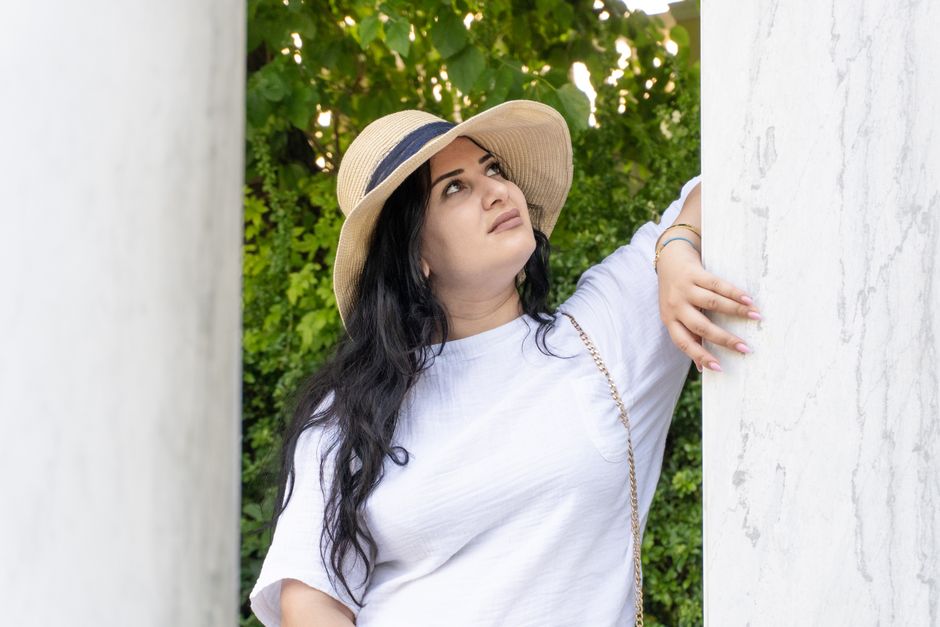
Choose a relaxed linen or lyocell top, a straight or wide-leg bottom, and breathable sandals. That combination solves the main problem humidity creates: fabric stays slightly away from the skin, while the outfit still has enough structure for work, travel, lunch, or an early dinner. For a specific starting point, wear a natural-fiber button-down over a simple tank, add cropped trousers in a dark neutral, and use a washable tote instead of a heavy leather shoulder bag.
Do not buy a new outfit just because a product label says “summer.” Reject anything lined in thick polyester, anything that pulls when you sit, and any shoe that has not survived a short test walk. If you need one dependable purchase, make it the linen shirt; it gives you the most combinations with the least heat. For humid days that include commuting and evening plans, the linen shirt, relaxed trouser, and rubber-soled sandal formula is the clear winner because it balances airflow, coverage, polish, and real-world comfort.
