
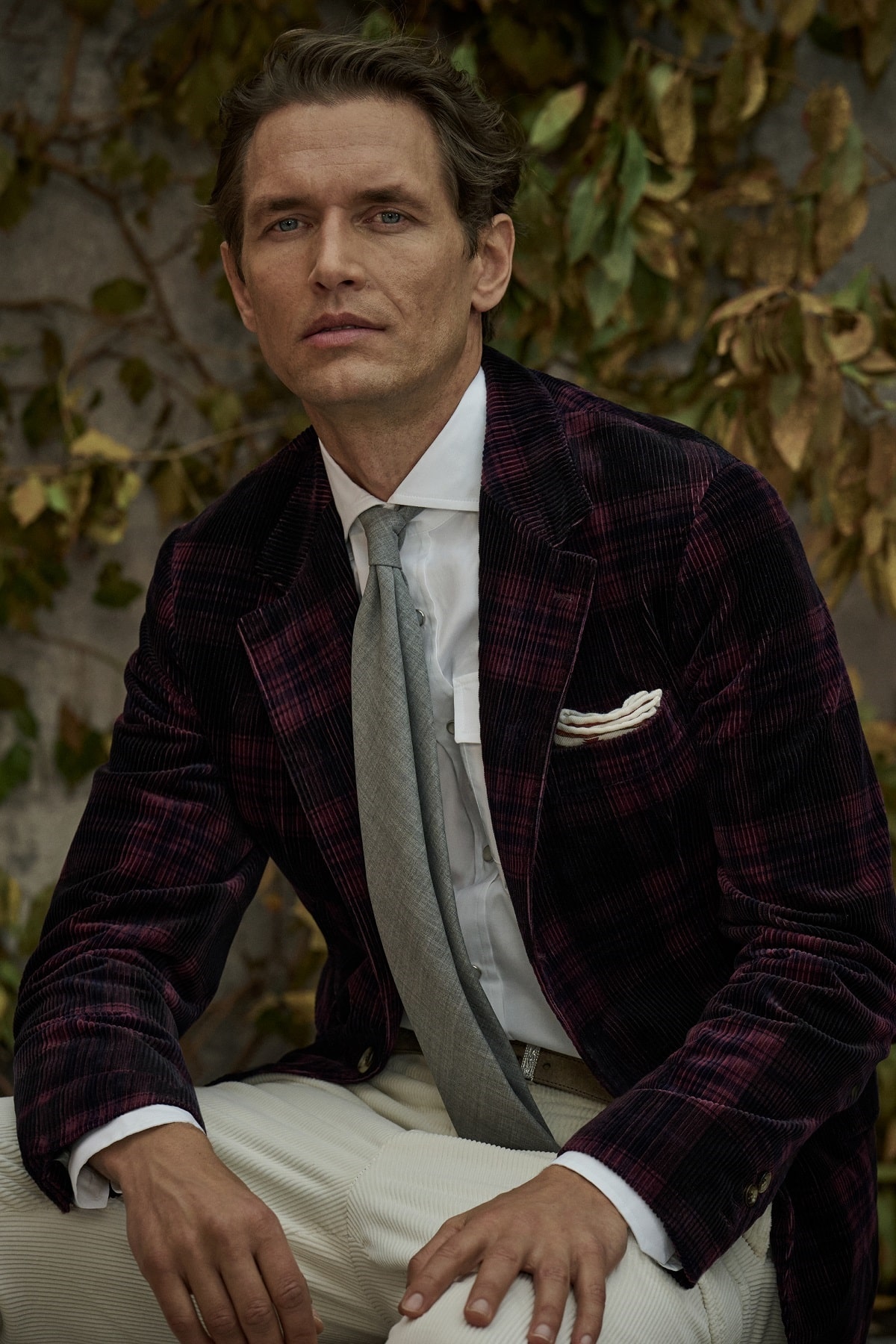
Most men think a formal shirt is just a white button-down with a collar. They grab the cheapest one off the rack, pair it with a black suit, and call it done.
That shirt is why you look like you borrowed your dad’s clothes for prom.
A formal shirt is not a uniform. It’s the foundation of your entire outfit. Get it wrong, and nothing else matters. Get it right, and a $500 suit looks like $2,000.
This article covers the four things that separate a dressed-up shirt from a dressed-down one: fabric quality, collar construction, fit precision, and cuff style. No fluff. Just what works.
Why Most Men’s Shirts Fail at Formal Events
The problem starts at the store. Most shirts sold as “formal” are actually business casual shirts with a stiff collar and a boxy cut. They’re designed to sit under a blazer at the office, not to hold up at a black-tie wedding or a gala dinner.
Here’s what makes a shirt fail in formal settings:
- Fabric weight too light. A 60-thread-count cotton oxford shirt wrinkles before you sit down. Formal fabrics need a minimum of 80-thread-count, preferably 100+ for a crisp drape.
- Fused collars that curl. Cheap shirts use fused collars — glue between two layers of fabric. After three dry cleans, the glue separates and the collar curls up like a potato chip. Formal shirts use sewn-in interlining or lined collars that hold their shape for years.
- Boxy fit. A shirt that tents at the waist adds 15 pounds visually. Formal fit should follow your torso without pulling at the buttons.
One specific example: the Charles Tyrwhitt Extra Slim Fit shirt ($89) uses a 100-thread-count cotton with a sewn-in collar. It costs $30 more than a department-store brand, but the collar stays flat after 50 washes. That’s the difference between looking sharp and looking sloppy.
If you’re wearing a shirt with a fused collar to a formal event, you’re gambling. Replace it.
The Real Cost of a Bad Shirt
A fused-collar shirt costs $40. It lasts 15 wears before the collar starts curling. Cost per wear: $2.67.
A lined-collar shirt from Brooks Brothers or Eton Shirts costs $130. It lasts 100+ wears with proper care. Cost per wear: $1.30.
The cheaper shirt costs more in the long run. And it looks worse every single time.
The Collar Rules You Can’t Ignore
The collar is the first thing people see. It frames your face. A bad collar ruins an otherwise perfect outfit.
Here are the four collar types that belong at formal events, and exactly when to wear each:
| Collar Type | Best For | Required Tie Knot | Face Shape | Example Brand |
|---|---|---|---|---|
| Spread collar | Black tie, gala, weddings | Windsor or double Windsor | Round or oval | Eton Shirts (from $150) |
| Point collar | Business formal, dinner events | Four-in-hand or half-Windsor | Square or angular | Brooks Brothers Regent Fit ($98) |
| Wing collar | White tie, morning dress | Bow tie only | Any (very formal) | Turnbull & Asser ($295) |
| Tab collar | Classic formal, vintage style | Four-in-hand | Narrow or long | Thomas Pink ($145) |
Spread collars are the safest choice for most formal occasions. They accommodate a Windsor knot, which fills the space between collar points and creates a balanced, symmetrical look. If you own one formal shirt, make it a spread collar in white.
Point collars are more conservative. They work best with smaller knots and narrower tie widths. If you have a square jaw, a point collar softens your face.
Wing collars are for white tie only. If you’re wearing one to anything less formal, you’re overdressed.
One Mistake to Avoid
Do not wear a button-down collar to a formal event. Button-down collars were invented for polo players — they keep the collar from flapping in the wind. They belong on casual oxford shirts, not under a dinner jacket. The buttons create visual clutter and the collar points don’t sit flat under a tie.
Fit Is Everything — Here’s the Exact Measurements
Fit is not subjective. There are hard numbers that separate a tailored shirt from a sack.
Here are the measurements your formal shirt must hit:
- Neck: One finger of space between collar and neck. No more. If you can fit two fingers, the collar is too loose and your tie knot won’t sit centered.
- Shoulders: The shoulder seam must sit exactly at the edge of your shoulder bone. Not hanging off. Not riding up. A seam that’s 1cm off makes the entire shirt look borrowed.
- Chest: Button the shirt. You should be able to pinch 1-2 inches of fabric at your sternum. Any more and it’s baggy. Any less and the buttons pull.
- Sleeve length: With your arms at your sides, the shirt cuff should reach the base of your thumb. When you bend your elbow 90 degrees, the cuff should sit 1cm below your wrist bone.
- Waist: The shirt should follow your torso without excess fabric. A tailored fit removes 2-3 inches from the sides compared to a standard fit.
Most off-the-rack shirts fail on at least two of these. The fix is a tailor. A $20 shirt alteration (taking in the sides, shortening sleeves) transforms a $60 shirt into a $200 look.
If you’re buying online, Eton Shirts offers 13 different sleeve lengths and 4 fit options. Their Slim Fit in size 15.5/34 fits most men with minimal alterations. Charles Tyrwhitt offers 3 fits (Slim, Extra Slim, Classic) and free returns for 6 months. Order two sizes, keep the one that fits.
When NOT to Buy a Slim Fit
Slim fit is not for everyone. If your waist measures 38 inches or more, a slim-fit shirt will pull at the buttons and create horizontal stress lines. Buy a regular fit and have a tailor take in the waist by 1-2 inches. That gives you room in the chest and shoulders without the tent effect at the waist.
Fabric and Cuff Details That Separate Amateurs from Experts
Fabric quality is the easiest way to spot an amateur. A shirt that wrinkles after 30 minutes of wear immediately signals cheap fabric.
For formal occasions, you need two-ply cotton with a thread count of 100-140. Two-ply means two strands of cotton twisted together before weaving. It produces a stronger, smoother fabric that resists wrinkles and holds a crease. Single-ply fabrics (common in $40 shirts) feel rough and wrinkle instantly.
Weave matters too:
- Poplin: Tight, smooth weave. Best for black tie and summer formal events. Crisp and lightweight. Wrinkles less than broadcloth.
- Broadcloth: Slightly heavier than poplin. Good for year-round formal wear. Holds a crease well.
- Twill: Diagonal weave. More texture. Works for winter formal events but can look casual if the weave is too heavy.
- Herringbone or pinpoint oxford: Acceptable only for daytime formal events (morning dress). Never for evening events.
For cuffs, you have two choices:
French cuffs (double cuffs folded back and fastened with cufflinks) are the only correct choice for black tie and white tie. They add visual weight to your wrist and signal that you made an effort. Wear them with silk knot cufflinks or silver metal ones. Gold is flashy — reserve it for evening galas.
Barrel cuffs (single cuffs with buttons) are acceptable for business formal and daytime formal events. Use them when the dress code says “black tie optional” but you’re not wearing a dinner jacket. Keep the buttons simple — mother-of-pearl or white plastic. No colored buttons.
A specific recommendation: the Brooks Brothers Golden Fleece French Cuff Shirt ($168) uses 120-thread-count two-ply cotton with a spread collar. It’s the standard for formal events under $200. For a step up, Turnbull & Asser makes hand-sewn collars and cuffs starting at $295. The difference is subtle — the collar roll is softer, the stitching is tighter — but if you attend formal events more than twice a year, it’s worth the investment.
How to Style the Rest of the Outfit Around Your Shirt
Your shirt is set. Now build the rest.
For black tie events: White spread-collar shirt, French cuffs, black silk bow tie, black dinner jacket with peaked lapels, black trousers with a single satin stripe, black patent leather oxfords. That’s it. No variations. No colored shirts. No cummerbund unless the event specifies it.
For white tie events: White wing-collar shirt, white bow tie, white waistcoat, black tailcoat, black trousers with two satin stripes, black patent leather pumps. The shirt must have a stiff, detachable collar. No exceptions.
For business formal (weddings, galas, awards dinners): White or light blue spread-collar shirt, silver cufflinks, a solid silk tie in navy or burgundy, a notch-lapel suit in charcoal or navy, and black cap-toe oxfords. The tie should be 7-8cm wide. Skinnier ties belong at club nights, not formal dinners.
One rule that saves every outfit: match your metals. If your cufflinks are silver, your watch should be silver. If your belt buckle is gold, your cufflinks should be gold. Mixing metals looks careless.
Three real-world examples:
- Eton Shirts Slim Fit Spread Collar ($160) + navy suit + burgundy silk tie + silver cufflinks = wedding-ready.
- Charles Tyrwhitt Extra Slim Fit French Cuff ($99) + black dinner jacket + black bow tie + onyx cufflinks = black tie correct.
- Brooks Brothers Regent Fit Point Collar ($98) + charcoal suit + navy grenadine tie + mother-of-pearl buttons = business formal that doesn’t try too hard.
Skip the pocket square unless you know how to fold it. A flat white linen square in a straight fold is safe. Anything fancier requires practice. A bad pocket square fold is worse than none.
