
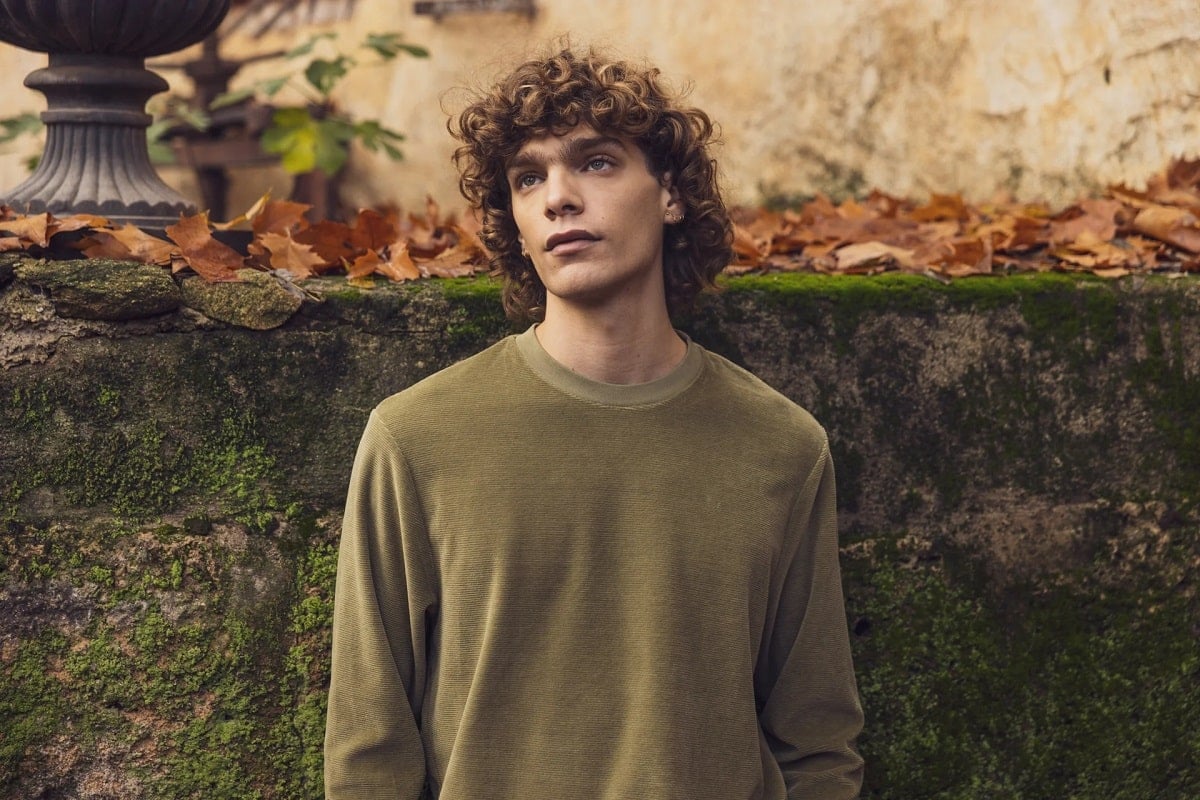
The question is not what is trending. The question is what works. Autumn 2026 demands a wardrobe that resists the weather and the hype cycle. After reviewing the collections from Pitti Uomo 106, the runway shows in Milan, and the buying patterns of men who dress well without dressing like a mannequin, five pieces emerge as the foundation. Not a list of everything you need. The five items that actually matter.
The Waxed Cotton Field Jacket: Why It Wins Every Autumn
The waxed cotton field jacket is the single most versatile outerwear piece a man can own for autumn. It is not waterproof in the way a Gore-Tex shell is, but it handles steady rain, wind, and cold better than any other fabric at its weight. The original Barbour Beaufort, made in South Shields, England, has been in continuous production since 1983. The current retail price is approximately $449. The jacket weighs 1.2 kilograms (2.6 pounds) and uses a 6-ounce Sylkoil waxed cotton that requires re-waxing every two to three years.
Why does this matter? Because a field jacket solves the core autumn problem: variable weather. Morning frost, midday sun, afternoon rain. The waxed cotton breathes better than a synthetic rain jacket, meaning you do not sweat when the temperature rises. It also layers. A T-shirt under a field jacket works at 15°C (59°F). Add a merino crewneck sweater and the same jacket works at 5°C (41°F). That is a 10-degree range from a single garment.
The failure mode most men hit: buying a jacket that is too small. A field jacket must be sized to accommodate a mid-layer. If it fits snug over a T-shirt, it fails its primary function. Order one size up from your usual suit jacket size.
Alternatives worth considering: The Belstaff Trialmaster ($795) uses a heavier 8-ounce cotton and a rubberized wax finish. It is more water-resistant but less breathable. The Private White V.C. Ventile field jacket ($850) uses Ventile cotton, which is completely waterproof when wet without wax. It is lighter, but requires dry cleaning. For a budget option, the Barbour Bedale ($399) is shorter and cut for cycling. It works if you are under 5’10”.
When NOT to buy a waxed cotton jacket
If you live in a climate where autumn means heavy, prolonged rain (Pacific Northwest, UK, parts of Scandinavia), a waxed jacket will eventually wet out after two hours of steady downpour. In that case, a Gore-Tex shell like the Arc’teryx Beta LT ($599) is the better choice. The tradeoff: synthetic shells do not breathe as well in dry cold, and they do not develop the same patina. A waxed jacket looks better after five years of wear. A Gore-Tex jacket looks the same on day one and day one thousand.
Four Knitwear Rules That Eliminate Bad Purchases
Knitwear is where most men waste money. They buy based on color or brand, not construction. Three specific rules filter out 90% of bad sweaters.
Rule 1: Gauge matters more than fiber content. A 12-gauge merino sweater (standard weight) is appropriate for autumn. A 7-gauge sweater (chunky) is for winter. A 16-gauge (fine) is for layering under a blazer. If the label does not state the gauge, assume it is a cheap machine-knit that will pill within three wears.
Rule 2: Shoulder seams must align with your natural shoulder bone. If the seam sits on top of your shoulder (too small) or hangs past it (too large), the sweater will look sloppy regardless of price. This is the single most common fit error in knitwear.
Rule 3: Avoid 100% acrylic or polyester blends for anything you intend to wear more than ten times. These fabrics do not breathe, they trap odor, and they lose shape after washing. A 100% merino wool sweater from Uniqlo ($49.90) outperforms a 50% acrylic blend from a designer brand at $300.
The specific recommendation for autumn 2026: The Drake’s Donegal tweed crewneck sweater ($395). It uses a 12-gauge, 100% Irish wool with neps (small flecks of color). It is heavy enough to wear as an outer layer on mild days, light enough to fit under a field jacket. The color should be a heathered brown or oatmeal — these hide stains and work with denim, chinos, and wool trousers.
The mistake most men make with cashmere
Cashmere is not an autumn fabric. Cashmere is a winter fabric. A 2-ply cashmere sweater (the most common grade) is too light for autumn temperatures unless layered over a shirt and under a jacket. Men buy cashmere for autumn because it feels luxurious, then freeze. Save cashmere for December through February. For autumn, buy wool or lambswool.
The Raw Selvedge Denim: One Pair, Three Years of Wear
A single pair of raw selvedge denim jeans can replace three pairs of cheaper jeans over a three-year period. The economics are straightforward. A pair of Levi’s 501 STF (shrink-to-fit) costs $98. A pair of Pure Blue Japan XX-013 costs $320. The Levi’s will last approximately 18 months of regular wear before the crotch blows out. The Pure Blue Japan will last 36 months or more, assuming you wash them correctly. That is $196 vs. $320 over three years — a $124 difference for a garment that looks better with age and has a higher resale value.
What raw selvedge actually means: “Raw” means the denim has not been washed after dyeing. The indigo is still on the surface. It will fade and crease according to your body and movement. “Selvedge” refers to the self-finished edge of the fabric, produced on a shuttle loom. It prevents fraying and indicates higher-quality construction. Neither term guarantees quality — a $50 pair of raw selvedge jeans from a fast-fashion brand uses the same terminology but lower-grade cotton and weaker stitching.
Fit guidelines for 2026: The slim-straight cut is the most versatile. A 7.5-inch leg opening (measured flat) works with boots and sneakers. A 6.5-inch opening is too narrow for autumn boots. A 8.5-inch opening is a straight leg that works with chunkier footwear. The waist should be snug — raw denim stretches approximately one inch after 30 wears.
When NOT to buy raw selvedge denim
If you need jeans that look presentable immediately, buy washed denim. Raw denim takes 4-6 months of regular wear to develop visible fades. If you work in an office that requires pressed trousers, buy a pair of Iron Heart 777s ($395) — they are 21-ounce denim that holds a crease better than lighter weights. If you live in a humid climate, raw denim can develop mildew if not aired out after each wear. Rotate with a second pair.
The Chelsea Boot: One Boot for Three Seasons
The Chelsea boot is the only footwear that works with jeans, chinos, wool trousers, and even some suits. The elastic side panel makes it easy to put on and take off. The lack of laces means it reads as more formal than a work boot but more casual than an oxford. For autumn 2026, the specific recommendation is the R.M. Williams Comfort Craftsman in chestnut brown ($595).
The technical details: The boot uses a yearling leather (young cowhide) that is soft enough to break in within two weeks. The sole is a leather-and-rubber combination — a leather stack with a rubber grip insert at the heel and ball of the foot. This provides the elegance of a leather sole with the traction of rubber. The boot weighs 580 grams (1.28 pounds) per boot in size 9. The elastic is a double-weave that typically lasts 3-5 years before needing replacement.
Three alternatives depending on your use case:
- For wet weather: The Blundstone #585 ($210). It uses a full rubber sole and waterproof leather. It is not as elegant, but it handles snow and rain better than any Chelsea boot at any price.
- For a dressier silhouette: The Crockett & Jones Islay ($695). It uses a Dainite rubber sole and a sleeker last. It fits under a suit trouser without bunching.
- For budget: The Thursday Boot Company Captain ($199). It uses a Goodyear welt construction and chrome-excel leather. It is not made in Australia or England, but the construction quality is comparable to boots at twice the price.
The sizing trap
R.M. Williams boots run one full size large. A US size 10 typically requires a UK/AU size 9. Blundstones run half a size large. Thursday Boots run true to size. If you order online without knowing your exact Brannock measurement, order from a retailer with free returns. The cost of a wrong size is the return shipping and a month of waiting.
The Heavyweight Flannel Shirt: A Second Jacket
A heavyweight flannel shirt (defined as 8 ounces or heavier per yard) functions as a shirt, a light jacket, and a mid-layer. It is the most efficient garment in an autumn wardrobe. One flannel shirt replaces a button-down shirt, a thin sweater, and a light overshirt.
The specific recommendation: The Pendleton Board Shirt in the “Chief Joseph” pattern ($129). It uses a 9-ounce, 100% virgin wool flannel. It is heavier than cotton flannel, meaning it holds heat even when damp. The cut is generous — it fits over a T-shirt easily and under a field jacket without restricting movement. The pattern is a plaid that has been in continuous production since 1950. It does not go out of style because it was never in style.
Why wool flannel beats cotton flannel for autumn: Cotton flannel (Pendleton’s own 6-ounce cotton flannel shirts, $89) is fine for spring. For autumn, wool provides warmth without weight. A 9-ounce wool flannel weighs approximately 340 grams (12 ounces). A comparable cotton flannel in the same weight would be 9 ounces of cotton, but cotton does not insulate when wet. Wool retains 80% of its insulating capacity when saturated. Cotton retains 0%.
The failure mode: Men buy flannel shirts that are too tight. A flannel shirt must be able to button over a T-shirt without pulling at the chest. If it fits snug, it cannot be worn as a jacket. Buy for the chest measurement, not the neck size. A 16-inch neck with a 42-inch chest should buy a size Large, not a Medium.
| Weight (oz/yd) | Fabric | Best Use | Example Brand | Price |
|---|---|---|---|---|
| 6 oz | Cotton flannel | Spring, mild autumn | Pendleton cotton flannel | $89 |
| 8 oz | Cotton flannel | Autumn shirt | Filson tin cloth flannel | $145 |
| 9 oz | Wool flannel | Autumn shirt/jacket | Pendleton wool board shirt | $129 |
| 12 oz | Wool flannel | Winter overshirt | Iron Heart wool flannel | $395 |
When NOT to buy a wool flannel: If you have sensitive skin, wool flannel can itch against bare skin. Wear a cotton T-shirt underneath. If you live in a climate where autumn temperatures stay above 18°C (65°F), a 9-ounce wool flannel is too warm. Buy the 6-ounce cotton version instead.
The five pieces described here — a waxed cotton field jacket, a 12-gauge wool crewneck sweater, a pair of raw selvedge denim jeans, a Chelsea boot, and a heavyweight wool flannel shirt — form a complete autumn wardrobe that works from September through November. They are not the only options. But they are the options that solve the actual problems autumn presents: variable weather, layering requirements, and the need for clothing that lasts beyond a single season. The man who owns these five pieces can dress for any autumn occasion without buying anything else. That is the point.
