

Most athleisure outfits on boys look like they were thrown together in the dark. Baggy sweatpants with a wrinkled tee, a hoodie that’s two sizes too big, and sneakers that have seen better days. The problem isn’t the clothes themselves. It’s the lack of a system. Athleisure, at its core, solves a specific problem: how to look put-together while wearing clothes designed for movement. If the fit is off or the fabrics fight each other, the whole look collapses. This guide walks through the actual decisions that separate a cohesive outfit from a sloppy one.
Why Most Athleisure Outfits for Boys Fail Before They Leave the House
The single biggest mistake is treating athleisure as “just gym clothes.” It’s not. Gym clothes prioritize sweat wicking and range of motion above all else. Athleisure prioritizes fit and fabric harmony first, then performance second. A pair of Nike Dri-FIT running shorts ($35, 5-inch inseam) works great for a 5K. Worn with a cotton hoodie and leather sneakers, it looks like you forgot to change after practice.
The second mistake: ignoring the silhouette rule. Athleisure demands one fitted piece and one relaxed piece. If both are baggy, you look shapeless. If both are tight, you look like you’re about to compete in a triathlon. The correct ratio is one slim item (joggers or a fitted tee) paired with one looser item (an oversized hoodie or a relaxed crewneck).
Third mistake: fabric mismatch. Cotton and polyester blends behave differently. Cotton absorbs moisture and wrinkles. Polyester wicks and holds shape. Mixing a heavy cotton Champion Reverse Weave hoodie ($60, 12 oz fleece) with thin nylon joggers creates a visual and tactile clash. The hoodie feels substantial; the joggers feel flimsy. The outfit reads as incoherent.
The 3-Second Fit Check
Before buying any piece, hold it up. Does it have visible branding larger than a credit card? If yes, it’s a statement piece, not a foundation piece. Statement pieces work only when everything else is plain. Does the waistband sit at your natural hip without a belt? If you need a belt with joggers, the size is wrong. Does the sleeve cuff on a hoodie hit your wrist bone? If it covers your knuckles, the hoodie is too long in the arm, which pulls the shoulders out of shape.
The Core Pieces: What to Buy, What to Skip

You only need five items to build every athleisure outfit. Buying outside this list increases the chance of mistakes. Here’s the breakdown by category, with specific products that have proven durability and fit.
| Piece | Recommended Product | Price | Why It Works | Common Failure |
|---|---|---|---|---|
| Joggers | Lululemon ABC Jogger (Warpstreme) | $128 | Four-way stretch, tapered leg, no pilling after 50 washes | Cheap joggers bag at the knee within 3 wears |
| Hoodie | Champion Reverse Weave (Crew or Hood) | $60 | Side panels prevent shrinking, 12 oz fleece holds shape | Thin hoodies (under 10 oz) lose structure after one wash |
| Performance Tee | Under Armour Tech 2.0 Short Sleeve | $25 | Flatlock seams, anti-odor, 4-way stretch, 6 colors | 100% cotton tees get sweat stains and wrinkle |
| Jacket | Adidas Tiro 21 Full-Zip Track Jacket | $65 | Double-knit fabric, zippered pockets, slim fit over a hoodie | Nylon windbreakers don’t layer well and look cheap |
| Sneakers | Nike Air Max 90 (leather/mesh mix) | $130 | Retro silhouette works with joggers and jeans, visible Air unit adds visual weight | Running shoes with mesh uppers look too technical for casual wear |
The verdict: spend your money on joggers and a hoodie first. Those two pieces determine 70 percent of the outfit’s success. Cheaping out on joggers is the fastest way to look unkempt. The Lululemon ABC Jogger costs more upfront but outlasts three pairs of $40 joggers by a factor of five in wash cycles.
How to Layer Without Looking Bulky
Layering in athleisure is about adding warmth without adding visual weight. The rule: each layer should be no more than 2mm in fabric thickness difference from the next. A thin cotton tee (1mm) under a medium fleece hoodie (4mm) creates a visible bump at the chest. A performance tee (1.5mm) under a mid-weight hoodie (3mm) lies flat.
The correct stack for a 60°F day: Under Armour Tech 2.0 tee (base) + Champion Reverse Weave hoodie (mid) + Adidas Tiro 21 jacket (shell). The jacket’s double-knit fabric slides over the hoodie without catching. The hoodie’s side panels prevent the sleeves from bunching under the jacket. The tee’s flatlock seams don’t show through the hoodie.
For a 45°F day, swap the hoodie for a Patagonia Better Sweater Fleece ($139, 1/4-zip). It’s 8.5 oz fleece, heavier than the Champion, but the 1/4-zip allows ventilation. Layer the Tiro jacket over it. Do not add a third mid-layer. Three layers in athleisure only works if the outer layer is a shell (no insulation). The Tiro jacket has no insulation, so it works as a wind barrier. If you add a puffer vest between the hoodie and jacket, you look like a marshmallow.
When to Skip Athleisure Entirely

Athleisure is not appropriate for every situation. Knowing when to opt out saves you from looking out of place. Here are three scenarios where you should wear something else.
- Formal events: A school dance, a family dinner at a sit-down restaurant, a job interview. Athleisure reads as disrespectful in these contexts. Wear chinos and a button-down instead.
- Hot, humid weather (above 85°F): Polyester joggers trap heat. Cotton hoodies absorb sweat and become heavy. Shorts and a loose linen shirt will keep you cooler and look more intentional.
- When you need to look authoritative: Meeting a teacher’s parent, giving a presentation, or being the designated leader of a group. Structured clothing (a collared shirt, denim, leather shoes) signals competence. Athleisure signals relaxation.
The tradeoff is real: athleisure prioritizes comfort and movement over formality and structure. If the situation demands the latter, leave the joggers at home.
Three Fit Mistakes That Ruin an Athleisure Outfit
These three errors are so common that fixing them instantly upgrades any outfit.
Mistake 1: Joggers that are too long. The cuff should sit at the top of your ankle bone, not bunch over your sneaker. If the fabric pools, you lose the tapered silhouette. Solution: buy joggers with a 28-inch inseam (standard) or 26-inch (if you’re under 5’8”). Lululemon offers free hemming on all joggers.
Mistake 2: Hoodie that is too wide in the shoulders. A hoodie should follow your natural shoulder line, not extend past it by more than 1 inch. If the shoulder seam drops past your deltoid, the hoodie is too big. The arms will look disproportionately long, and the torso will billow. Solution: measure your chest circumference at the widest point, then buy a hoodie with a chest measurement 4-6 inches larger. For a 38-inch chest, a 42-inch chest hoodie fits correctly.
Mistake 3: Sneakers that are too clean or too dirty. Athleisure sneakers should look worn but not destroyed. A pair of all-white Air Force 1s that are pristine look like costume pieces. A pair with scuffed toes and frayed laces look neglected. The sweet spot: a light scuff on the toe cap, clean laces, and no visible stains on the midsole. Clean them with a soft brush and mild soap every two weeks.
Color Coordination: The Three-Palette System
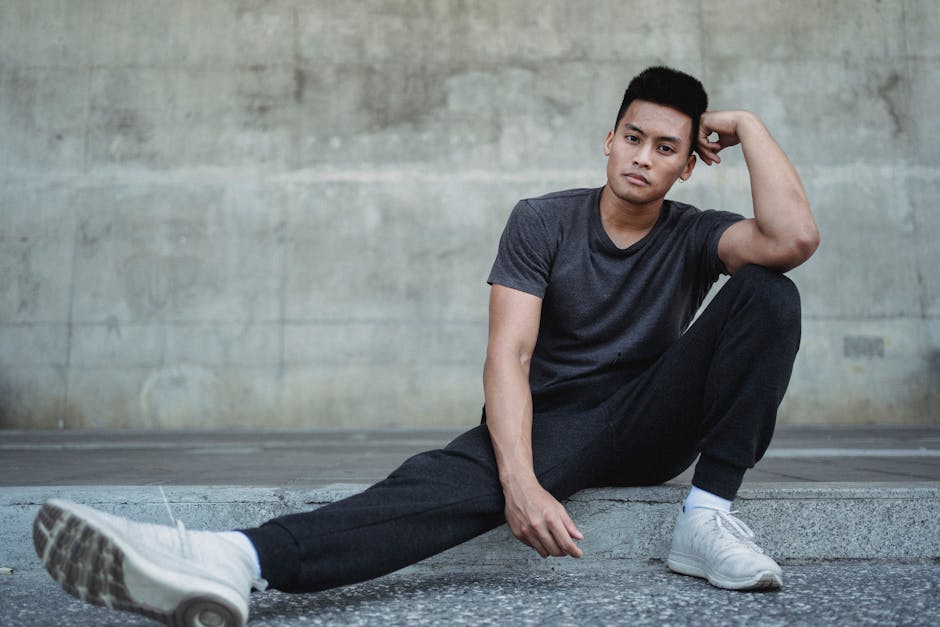
Stick to three color palettes. Do not deviate. Each palette contains three colors: one dominant (60% of the outfit), one secondary (30%), and one accent (10%).
Palette 1: Neutral Foundation — Dominant: Black. Secondary: Charcoal gray. Accent: White. This is the safest. Black joggers, gray hoodie, white sneakers. Works for every body type and every setting.
Palette 2: Earth Tone — Dominant: Olive green. Secondary: Beige. Accent: Navy. Olive joggers, beige tee, navy hoodie. Avoid adding brown or tan. The palette falls apart with too many warm tones.
Palette 3: Monochrome Blue — Dominant: Navy. Secondary: Light wash denim blue. Accent: White. Navy joggers, light blue hoodie, white sneakers. This works best for taller boys (above 5’10”) because the monochrome elongates the silhouette.
Do not mix palettes. An olive hoodie with black joggers and white sneakers creates three competing color families. The eye doesn’t know where to look. If you want to add a color outside the palette, make it a small accessory: a watch strap, a hat, or the logo on your sneakers.
The Two-Outfit System for a Week of School
You don’t need a different outfit for every day. You need two outfits that rotate. Here’s a system that works for a Monday-through-Friday schedule without repeating the exact same combination twice.
Outfit A (Monday and Thursday): Black Lululemon ABC Joggers + White Under Armour Tech 2.0 tee + Charcoal Champion Reverse Weave hoodie + Black Nike Air Max 90. This is the default. It works for PE, classes, and after-school hangouts.
Outfit B (Tuesday and Friday): Olive Lululemon ABC Joggers + Navy Under Armour Tech 2.0 tee + Beige Adidas Tiro 21 jacket + White Nike Air Max 90. This is the alternative. The jacket replaces the hoodie for a slightly more structured look. On Wednesday, wear Outfit A but swap the hoodie for the jacket. That’s three distinct looks from two outfits.
The total cost for both outfits: $128 (joggers) + $25 (tee) + $60 (hoodie) + $130 (sneakers) + $65 (jacket) = $408. That’s high for a single purchase, but the pieces last 2-3 years with proper care. The Lululemon joggers alone survive 200+ washes without losing shape. The Champion hoodie holds its color and structure for 150+ washes. The Under Armour tee resists pilling for 100+ cycles. The Adidas jacket’s zippers don’t fail for 500+ uses.
Compare that to fast-fashion alternatives: a $30 pair of joggers from a mall brand loses its cuff elasticity after 20 washes. A $20 hoodie pills after 10. You replace them every three months. Over two years, the fast-fashion route costs $240 for joggers alone (eight pairs at $30 each). The Lululemon pair costs $128 once. The math favors buying the expensive piece first.
The system works because it removes decision fatigue. You don’t stand in front of a closet wondering what fits together. You grab the pre-approved combination and go. That’s the entire point of athleisure: function first, appearance second, but both executed with intention.
