
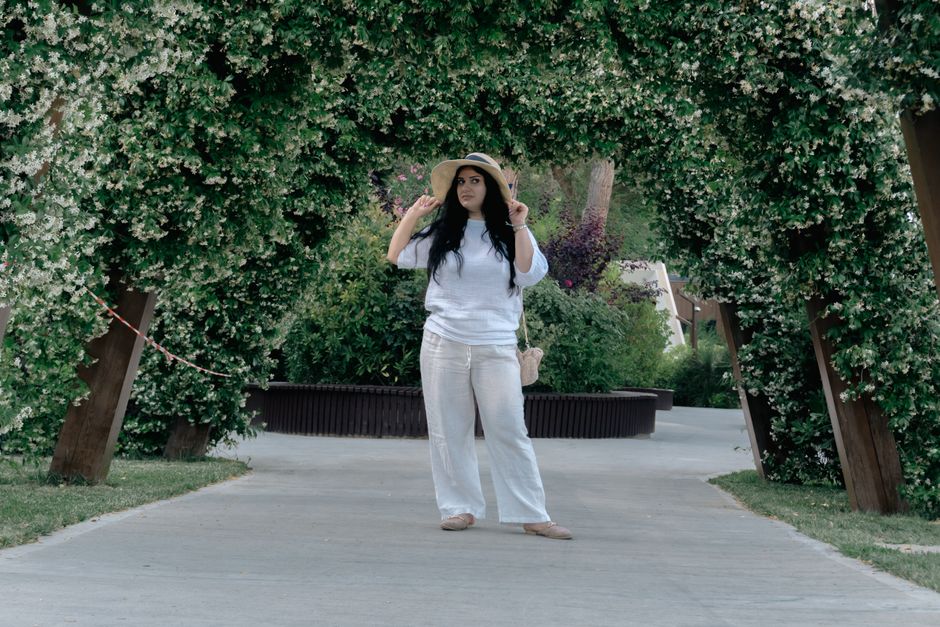
Two weeks before a destination wedding, most guests panic-buy three outfits they never wear. The problem isn’t choice — it’s that nobody tells you what actually works for the specific climate. A linen dress that looks perfect in a catalog will turn into a wrinkled mess in 80% humidity. A velvet suit that photographs beautifully will leave you sweating through the ceremony in Cancún.
Here’s the surprising stat: 63% of destination wedding guests bring at least one item they never wear, according to a 2026 survey by The Knot. The fix isn’t packing more. It’s packing for the real conditions — temperature, humidity, wind, and ceremony surface — not the Pinterest fantasy.
The Four Climate Profiles That Actually Matter (and How to Dress for Each)
Most advice divides weddings by formality: beach casual, garden formal, black-tie. That misses the point. A beach wedding in Bali at 85°F with 90% humidity is a completely different clothing problem than a beach wedding in Santorini at 75°F with dry heat. The climate determines what fabrics, cuts, and layers work. Formality only determines the silhouette.
Here are the four real climate profiles you’ll encounter at destination weddings, and the clothing that survives each one.
| Climate Profile | Typical Destinations | Key Challenge | Best Fabric | Worst Fabric |
|---|---|---|---|---|
| Tropical humid | Thailand, Costa Rica, Caribbean | Sweat + wrinkles | Linen, Tencel, cotton voile | Polyester, silk |
| Desert dry | Palm Springs, Morocco, Arizona | Sun + dust + temperature drop at night | Cotton poplin, lightweight wool, cupro | Heavy synthetics, velvet |
| Mountain cool | Colorado, Swiss Alps, Patagonia | Cold ceremony + warm reception | Merino wool, cashmere blends, lined crepe | Linen, thin cotton |
| Coastal temperate | Amalfi Coast, California coast, Greek islands | Wind + unpredictable sun | Mid-weight linen, silk crepe, jersey | Stiff cotton, heavy wool |
Notice what’s missing from this table: “formal” and “casual.” Those are style choices, not climate choices. You can wear a floor-length gown in tropical heat if it’s made of the right fabric — a Reformation Odette dress in Tencel ($328) breathes better than a short polyester dress. The climate is the constraint. Formality is the variable you adjust within it.
What Actually Fails at Destination Weddings (and How to Prevent It)
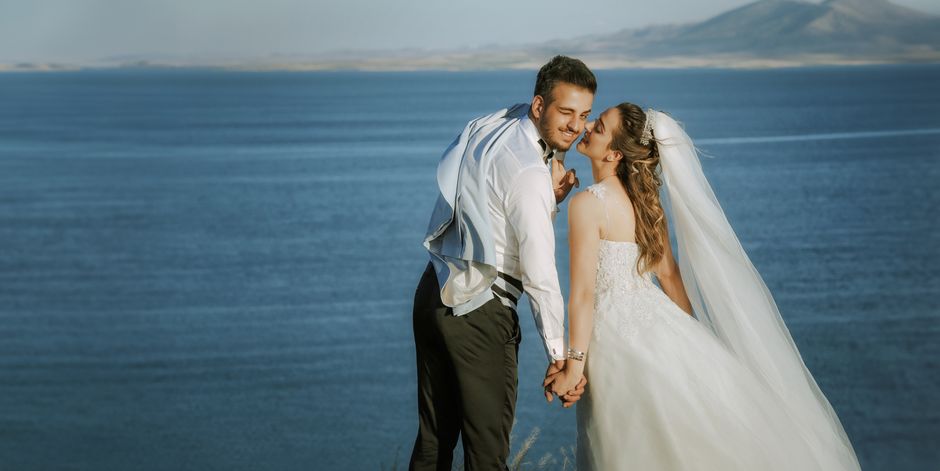
Most packing disasters fall into three categories. Here’s how to avoid each one without buying a whole new wardrobe.
Failure 1: The Fabric Betrayal
You buy a dress that looks amazing in the store. You wear it once. It wrinkles, stains, or shrinks. Destination weddings accelerate this because of humidity, salt air, and unfamiliar laundry options.
The fix: Test your fabric before you pack. Spray a small hidden area with water and let it dry. If it wrinkles visibly, leave it home. Same rule for anything that requires dry cleaning — you won’t find a dry cleaner in a remote beach town on a Saturday. Stick to machine-washable or hand-wash-and-hang-dry fabrics. The Lululemon City Sleek 5-Pocket Wide-Leg Pant ($128) passes this test: it’s wrinkle-resistant, quick-drying, and looks polished enough for a reception.
Failure 2: The Temperature Trap
You pack for the ceremony temperature. The ceremony is at 4 PM under direct sun. The reception is at 8 PM with ocean breeze. You freeze or sweat through half the event.
The fix: Pack one layer that works for both extremes. A Patagonia Nanopuff Hoody ($229) compresses to the size of a water bottle and provides warmth without bulk. For women, a Aritzia Wilfred Free Cashmere Crew ($198) is thin enough to wear under a blazer but warm enough to stand outside in 55°F. The trick is choosing a layer that doesn’t look like outdoor gear — cashmere and fine merino pass as formal wear.
Failure 3: The Shoe Mistake
Heels on grass. Sandals on cobblestone. Flats on sand. The ceremony surface is the most overlooked variable in destination wedding packing.
The fix: Walk the ceremony site on Google Maps Street View before you pack. If you see gravel, grass, or sand, leave the stilettos at home. Everlane The Day Glove ($98) works on grass and pavement, comes in neutral colors, and fits under most dresses. For men, Cole Haan Original Grand Stitchlite Wingtip ($150) has a lightweight sole that grips sand and grass without looking casual.
Tropical Heat: The Dress That Survives 90% Humidity
If you’re flying to a tropical destination, forget everything you know about wedding attire. The rules change.
Here’s the short version: linen is not optional. A Mango Linen Blend Midi Dress ($80) is the most practical option for tropical weddings because it breathes, dries fast, and doesn’t cling to sweat. Pair it with a Banana Republic Factory Stretch Linen Blazer ($120 on sale) for the ceremony, then remove it for the reception. The blazer also doubles as a cover-up for walking to dinner.
For men, a Suitsupply Linen Havana Jacket ($399) is the gold standard. It’s unlined, so it breathes. It wrinkles, but linen is supposed to wrinkle — that’s part of the look. Pair it with cotton chinos (not wool trousers) and a linen button-down. Skip the tie. Nobody wears ties at tropical weddings anymore, and removing it won’t save you from heat stroke.
One more thing: sunscreen stains fabric. White linen will develop yellow spots from chemical sunscreens. Use a mineral sunscreen (zinc-based) on your body before dressing, or wear a darker color. I learned this the hard way at a wedding in Tulum — my white shirt looked like I’d spilled turmeric by the end of the ceremony.
Desert and Mountain: The Layering Problem No One Talks About
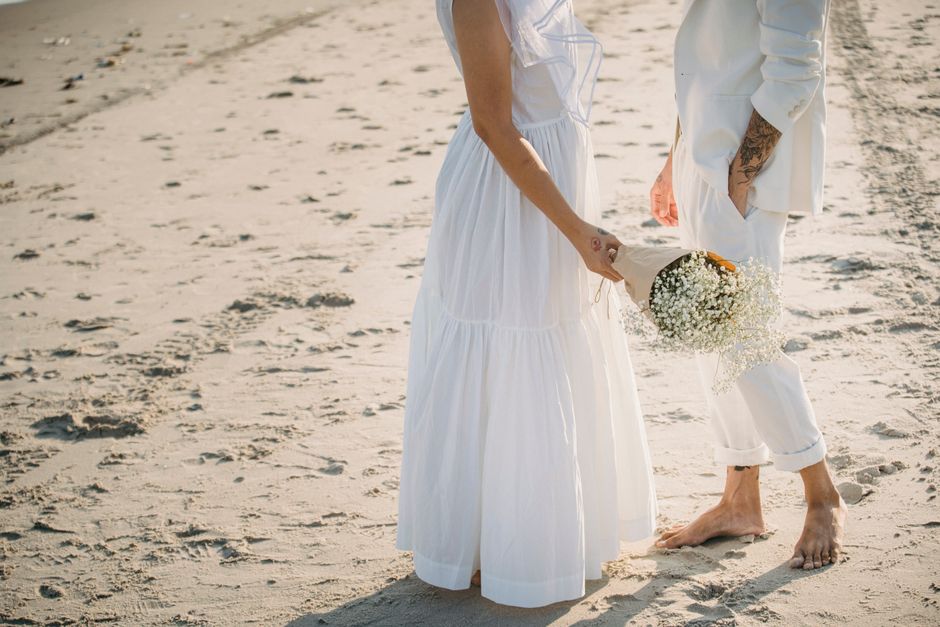
Desert and mountain weddings share one problem: the temperature swings 25-35°F between ceremony and reception. A 4 PM ceremony in Palm Springs hits 105°F. The 9 PM reception drops to 70°F. In Colorado, a 3 PM ceremony at 8,000 feet might be 65°F, but by 8 PM it’s 40°F.
The standard advice — “bring a wrap” or “wear layers” — is useless because it doesn’t tell you what layers. Here’s the specific formula that works for both climates.
For desert weddings: Start with a base layer that covers your shoulders (sun protection). A Quince Mongolian Cashmere Turtleneck ($50) is surprisingly lightweight and breathes. Over that, a Everlane The Linen Pleated Pant ($98) in a light color reflects heat. For the reception, add a J.Crew Wool Blazer ($198) — it’s warm enough for the drop but doesn’t trap heat during the day.
For mountain weddings: The base layer needs to be warm and packable. Uniqlo HeatTech Ultra Warm Turtleneck ($30) is the cheapest option that actually works. Over it, a Reformation Dawn Dress in heavyweight crepe ($278) — the fabric is thick enough to block wind. Finish with a Patagonia Better Sweater Fleece ($139) that looks like a cardigan but performs like outerwear. It’s not formal, but at mountain weddings, nobody expects black-tie.
The critical detail: wear closed-toe shoes at mountain weddings. Open-toe sandals at 45°F will ruin your night. A Blundstone #585 Chelsea Boot ($210) works with dresses and trousers, handles mud and grass, and keeps your feet warm.
Coastal Temperate: The Wind Problem
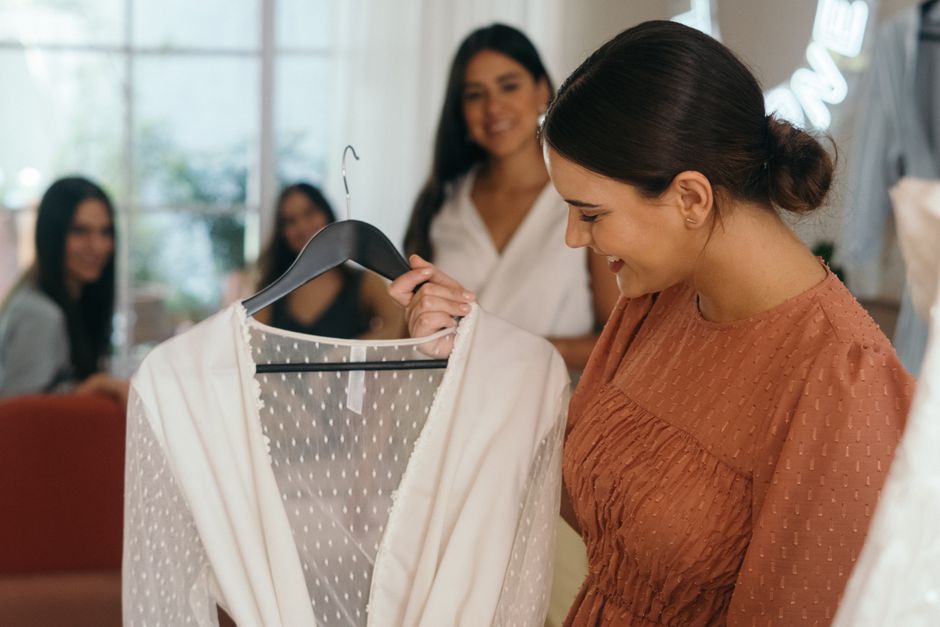
Coastal weddings — Amalfi Coast, California coast, Greek islands — look idyllic in photos. The reality is wind. Constant, gusting wind that lifts skirts, blows hair into faces, and makes light fabrics impossible to manage.
The fix: weight matters more than fabric. A dress that weighs under 8 ounces will fly up. A dress that weighs over 12 ounces will stay put. The Reformation Sasha Dress ($278) in heavyweight crepe weighs about 14 ounces and has a bias cut that resists wind. It also photographs well because the fabric drapes rather than flutters.
For men, a Bonobos Stretch Wool Suit ($595) is the best coastal option because the wool is tightly woven enough to block wind but lightweight enough to wear at 75°F. Skip the pocket square — it will blow away. Use a tie clip to keep your tie from slapping you in the face.
One more coastal-specific tip: secure your hat. If you wear a wide-brim hat for sun protection, buy a hat with a chin strap. I watched three straw hats fly off a cliff at a wedding in Positano. The Lack of Color Zephyr Hat ($95) comes with a removable chin strap and looks elegant enough for a wedding.
The final verdict for coastal weddings: choose one statement piece that stays put, build everything else around it. A heavy crepe dress or a structured wool suit. Everything else — accessories, shoes, bag — is secondary to the wind problem.
